Best Back Massager for Home: 2026 Comparison Guide
Table of Contents
- What the Best Back Massager for Home Needs to Get Right
- Quick Comparison: Massager Types at a Glance
- Shiatsu Back Massager with Heat: What It Does Well
- Portable Back Massager Options for Home, Office and Car
- How to Massage Your Own Back Without Help
- Back Massager Safety and Usage Time: What to Know Before You Buy
- Ownership Costs, Warranty and Long-Term Value
- Conclusion
- Frequently Asked Questions
Last Updated: October 21, 2026
What the Best Back Massager for Home Needs to Get Right
A back massager is a handheld or cushion-style device that applies vibration, rotation, or kneading pressure to back muscles to ease tension and soreness at home. The best back massager for home balances reach, control, and safety, not just raw power. At Walton Multiback Reacher, we build tools around a simple observation: most people cannot comfortably reach their own upper back. Below, we break down the criteria that matter, compare massager types, and flag the safety details most buying guides skip.
The Criteria That Actually Matter
Judge any massager on five things: how much of your back it reaches, how adjustable the intensity is, how it feels in the hand, how much noise it makes, and how easy it is to clean. Reach comes first. A device that only hits your lower back leaves the hardest area, the upper back and shoulder blade region, untouched. Intensity settings matter because muscle tension varies day to day. Grip matters for anyone with arthritis or limited hand strength. Noise and cleaning decide whether you actually use the thing on a Tuesday night.
Quick Comparison: Massager Types at a Glance
Each massager type suits a different body and a different routine.
|
Type |
Best For |
Reach |
Typical Use |
Key Mechanism |
Main Trade-off |
|---|---|---|---|---|---|
|
Shiatsu cushion with heat |
Lower and mid-back tension |
Fixed spot |
Seated at home or office |
Rotating nodes plus warming element |
Cannot reach upper back solo |
|
Handheld body massager |
Targeted knots, shoulders |
Limited solo |
Short sessions, any room |
Vibration or percussive head |
Arm tires at awkward angles |
|
Long-handle reaching tool |
Upper back, shoulder blades |
Full back solo |
Daily self-care at home |
Extended handle with fixed or interchangeable head |
Less power than corded cushions |
|
Portable cordless unit |
Travel and car use |
Varies |
On the go |
Battery-powered vibration or kneading |
Shorter run time, lighter pressure |
Shiatsu cushions and pillows use rotating nodes that mimic thumb pressure, and the heat element usually warms to a fixed range rather than a true adjustable temperature.
Handheld body massagers come in vibration and percussive styles. Vibration units are lighter and quieter; percussive units deliver deeper pulses but are heavier and louder.
Long-handle reaching tools solve the reach problem directly. The extended handle lets you apply pressure from over the shoulder or around the side while keeping your arm relaxed.
Portable cordless units trade power and run time for freedom of location.
Shiatsu Back Massager with Heat: What It Does Well
A shiatsu back massager with heat combines rotating massage nodes with warmth to loosen muscle tension before deeper pressure. The heat helps muscles relax, which makes the kneading feel less sharp. These units work best on the lower and mid-back, where you can lean into the cushion and let your body weight do the work.
The limits are real. A cushion stays where you put it, so reaching the upper back means repositioning against a chair or wall. Heat feels good but adds warm-up time, and corded models tether you to an outlet. For focused lower-back relief after a long day, a shiatsu cushion with heat is hard to beat.
Portable Back Massager Options for Home, Office and Car
Portability changes how often you use a massager. A cordless portable back massager that fits in a bag gets used in the car, at a desk, or on the sofa, while a bulky corded unit stays in a cupboard. Battery life and weight are the trade-offs. Lighter units tend to run shorter, and heavier units hold charge longer but are awkward to carry.
Think about where tension actually hits you. If it’s the drive home, a car-friendly unit earns its place. If it’s a desk job, a compact office model you can strap to a chair makes more sense. Match the device to the location, not the spec sheet.
How to Massage Your Own Back Without Help
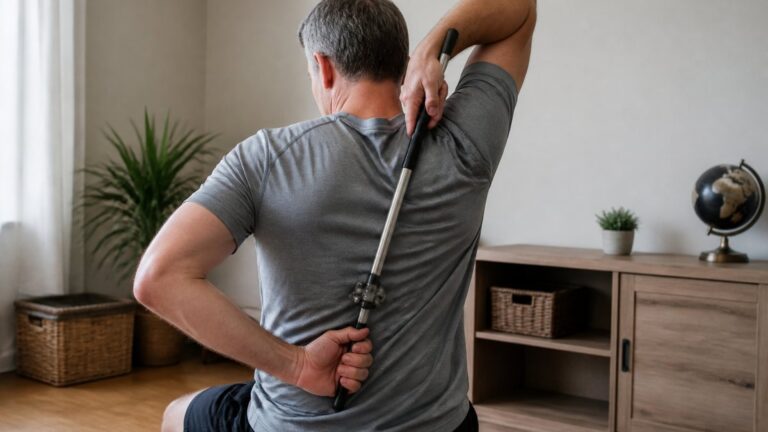
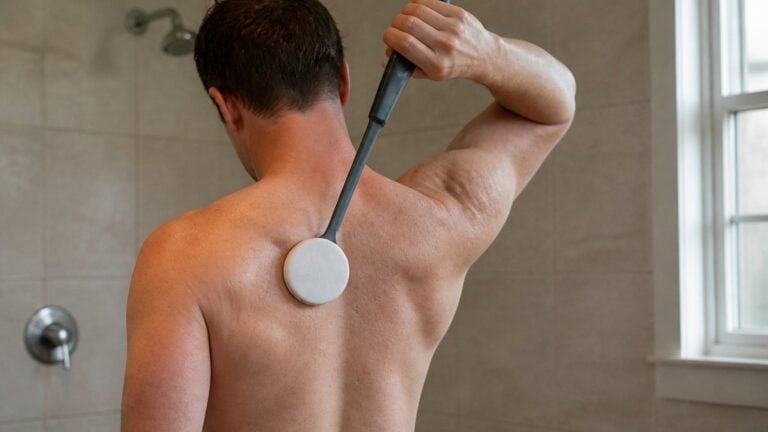
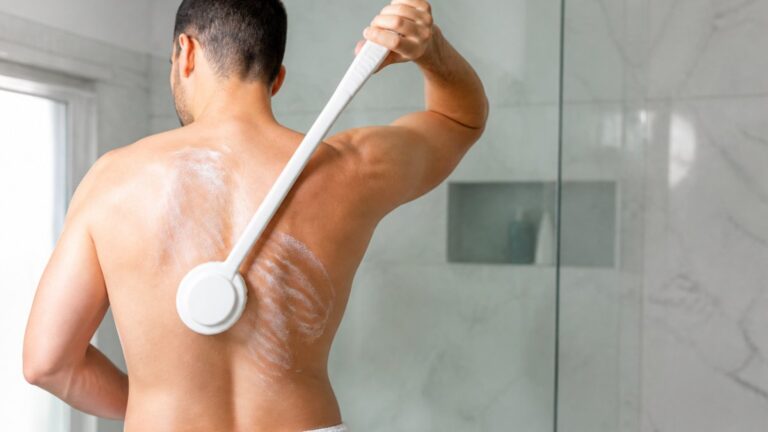
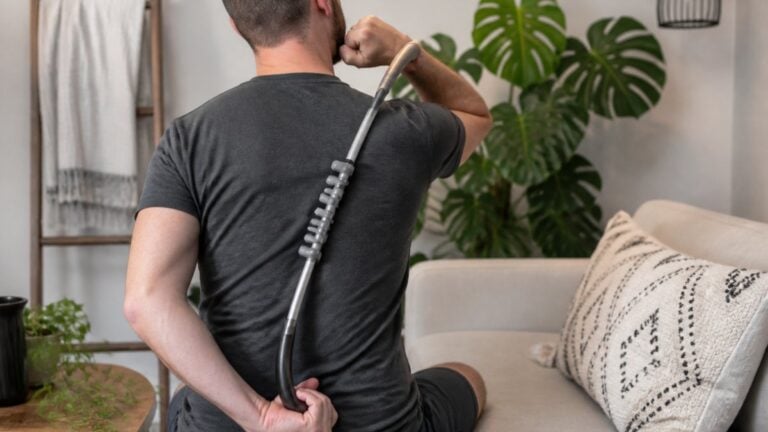
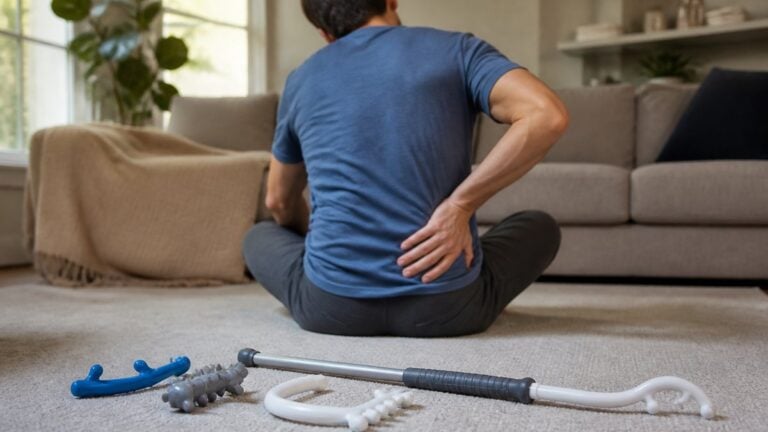
Massaging your own back without help comes down to reach and angle. The upper back and shoulder blades are the hardest spots to hit solo, because your arm has to work around your shoulder. The practical fix is a tool with an extended handle that lets you apply pressure from over the shoulder or around the side, keeping your arm relaxed.
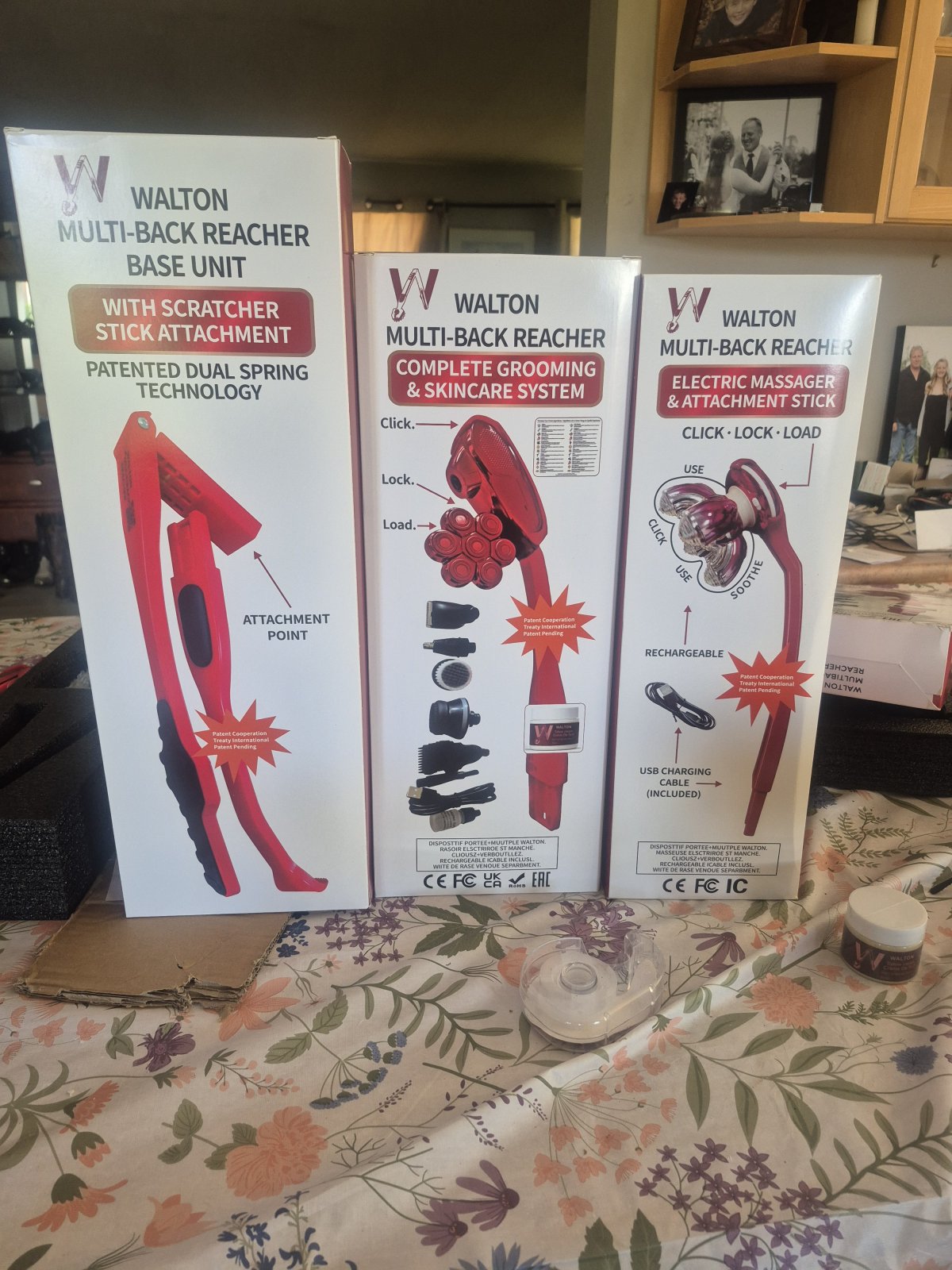
Man using an ergonomic handheld back massager to reach his upper shoulders while relaxing at home.
Reaching the Upper and Lower Back Solo
For the upper back, hold the tool over your shoulder and let the head rest against the muscle, then lean slightly into it rather than pushing hard with your arm. For the lower back, reach around your side and work upward in slow passes. Keep pressure light at first. A common mistake is pressing too hard too soon, which leaves you sorer than before.
Our Walton Multiback Reacher base unit is built for exactly this problem. The patented design holds constant resistance as you change angle, and the over-molded silicone grip stays secure even when your hands are tired or stiff. That combination of reach and grip is what makes solo upper-back work realistic.
Back Massager Safety and Usage Time: What to Know Before You Buy
Most buying guides treat safety as a footnote. This section treats it as a buying criterion, because the wrong device or the wrong technique can leave you sorer than before. The guidance below distinguishes what a massager can reasonably address from what needs professional assessment, and it explains how to use pressure and heat without overdoing it.
What a Massager Can and Cannot Address
A back massager eases temporary muscle tension, everyday stiffness after sitting or driving, and the general soreness that follows unaccustomed activity. It does not treat structural problems, nerve compression, or inflammation. A common pattern is that people buy a massager for persistent pain that has lasted more than a few weeks, and the device provides short-term comfort without addressing the cause.
Distinguish three situations before you buy:
- Temporary muscle tension: soreness that follows a long drive, a desk day, or a new exercise and settles within a few days. A massager is a reasonable comfort tool here.
- Persistent pain: pain that lasts more than a few weeks, recurs, or worsens despite rest. A massager may still feel good, but it is not a substitute for assessment.
- Radiating pain: pain that travels down a leg or arm, or comes with numbness, tingling, or weakness. This pattern suggests nerve involvement, and a massager should not be used on the affected area until a clinician has assessed it.
Pressure, Heat, and Session Limits
A sensible rule is short sessions of around 10 to 15 minutes per area, then a break. Longer sessions on one spot can leave muscles irritated rather than relaxed.
Keep pressure light at first, especially over the upper back and shoulder blades, where the muscle is thin over bone. Pressing hard with a handheld tool or leaning heavily into a shiatsu cushion can bruise tissue and leave you sorer the next day.
Heat adds comfort but also adds risk. Most cushions warm to a fixed range rather than a true adjustable temperature, so check the surface with your hand before settling in.
Who Should Use Caution
Check with a clinician before using any massager if you have a diagnosed back condition, a recent injury or fracture, circulation problems, osteoporosis, or you are pregnant. People taking blood thinners or with reduced skin sensation should also be cautious, because they may not feel excessive pressure or heat in time to stop.
Skip massage over inflamed, injured, or broken skin, and avoid pressing directly on the spine. Stop if you feel sharp pain, numbness, or tingling. A massager eases muscle tension; it does not treat a medical problem.
Matching Safety Features to Your Needs
When you compare devices, look for adjustable intensity rather than a single on/off setting, an auto shut-off timer, and a surface you can wipe clean. For anyone with limited hand strength or dexterity, a secure grip and simple controls matter more than extra attachments. These features decide whether you can use the device safely on a tired evening, not just on the day you unbox it.
Ownership Costs, Warranty and Long-Term Value
Long-term value comes from build quality, warranty length, and how easy the device is to clean and store, not from the sticker price alone. A cheaper unit that fails in a year costs more than a durable one that lasts. Check the warranty terms before buying, and confirm what’s covered: motor, battery, and attachments often carry different periods.
Cleaning is part of ownership. Wipe down surfaces after use, keep fabric covers washable, and store cordless units charged but not plugged in. For interchangeable tools, confirm the attachments lock firmly in place; a loose attachment is a safety issue, not just an annoyance.
Conclusion
Finding a massager that reaches your whole back, feels secure in the hand, and fits your daily routine is the real challenge, especially if you live alone or have limited shoulder mobility. Walton Multiback Reacher was designed for that gap, with a patented handle that holds constant resistance as you change angle, an over-molded silicone grip for tired hands, and interchangeable attachments that include a massager alongside grooming and skincare tools. Add to cart and make reaching, soothing, and maintaining your back part of an easy daily routine.
Frequently Asked Questions
What can I use to massage my own back at home?
A handheld massager with a long, adjustable handle is the most practical choice for solo use, because it lets you reach the upper and lower back without twisting your shoulders. Massage cushions and shiatsu pillows work well for the mid and lower back when you can lean against them, while portable units cover the neck and shoulders. If your range of motion is limited, look for a tool with an ergonomic grip and a handle that holds its angle under pressure, so you are not fighting the device while you use it.
Are shiatsu back massagers with heat effective for muscle tension?
Shiatsu-style massagers use rotating nodes to mimic deep-tissue pressure, and many users find that combining that pressure with gentle heat makes stiff muscles feel looser. Heat alone does not fix a muscle problem, but it can make the massage feel more comfortable and help you relax into it. Keep sessions short, start on the lowest intensity, and never use heat on swollen, inflamed or injured areas. If pain is sharp or persistent, speak to a clinician before relying on a massager.
How long should I use a back massager on my back?
Most manufacturers suggest sessions of around 10 to 15 minutes per area, once or twice a day. Longer sessions do not add much and can leave muscles feeling sore or bruised, especially on high intensity. Work on the muscle rather than the spine itself, keep the pressure comfortable, and stop if you feel numbness or sharp pain. If you have a diagnosed condition, are pregnant, or use a pacemaker, check with a clinician before using any powered massager.
How do I choose a back massager for home use?
Start with where you will use it: a cushion suits a sofa or armchair, a portable unit suits the office or car, and a handheld tool suits targeted work on the upper and lower back. Then check the adjustable speed and intensity settings, whether it has heat, how easy it is to clean, and how the grip feels in your hands. If shoulder flexibility is limited, prioritise a long handle with a secure silicone grip over a compact design, and confirm the warranty terms before you buy.
Always check with a healthcare professional before using any massager if you have a medical condition, injury, or ongoing pain.