How to Reach Back With Arthritis: A Step-by-Step Guide
Table of Contents
- Understanding Back Arthritis and Limited Reach
- Safe Reaching Techniques for Back Self-Care Without Twisting
- How to Apply Lotion to Your Back by Yourself
- Long-Handled Back Washer for Limited Mobility
- Adaptive Grooming Aids for Arthritis
- Common Mistakes to Avoid When Reaching Behind Your Back
- When to Seek Professional Help and Red Flags
- Frequently Asked Questions
Last Updated: October 21, 2026
Understanding Back Arthritis and Limited Reach
Back arthritis inflames the spine’s joints, stiffening your back and limiting how far you can reach behind yourself. Simple tasks like washing your back, applying lotion, or fastening clothing become struggles.
With back arthritis, cartilage between vertebrae wears down, creating pain and stiffness that makes twisting and reaching difficult. Your body protects itself by limiting movement, which compounds the problem.
Why arthritis reduces your range of motion
Arthritis damages the joints that let your spine bend and rotate. Inflammation thickens surrounding tissues, and muscles tighten to protect the painful area, all three reduce how far you can reach.
The neck and lower back handle most of your body’s movement, so arthritis there can make reaching behind nearly impossible. Limited shoulder flexibility makes it even harder.
Common reaching challenges and daily tasks affected
Reaching behind your back affects everyday activities: washing or scrubbing your back, applying sunscreen or lotion, and fastening bras or zipping jackets all become difficult.
Shaving or grooming your back becomes nearly impossible. Scratching an itch on your mid-back feels out of reach. These aren’t minor inconveniences. They impact your independence and quality of life.
The real challenge is reaching without pain. Most people with arthritis can technically move their arm behind their back, but pain stops them halfway. Proper technique and the right tools make the difference.
Safe Reaching Techniques for Back Self-Care Without Twisting
Learning how to reach back with arthritis safely prevents injury and reduces pain. The key is controlled movement without forcing your spine to twist. Your goal is gradual, gentle reaching that respects your body’s limits.

Step 1: Prepare your body and environment
Warm up with 3-5 minutes of gentle movement, walking or light stretches, to increase blood flow. Warm muscles are more flexible and less prone to injury.
Clear your space of obstacles and use good lighting. A mirror behind or beside you shows your arm position.
Wear loose clothing that doesn’t restrict movement, and stand with feet shoulder-width apart for a stable base.
Step 2: Use controlled arm and shoulder movements
Raise your arm to shoulder height with your elbow slightly bent. Move slowly; a gentle ache is normal, but sharp shooting pain means stop immediately.
Bring your arm behind your back in one smooth motion, letting your shoulder, more flexible than your spine, guide it. Don’t jerk or force it.
Breathe steadily; holding your breath tightens muscles and limits reach. Exhale as you move your arm back to relax muscles and improve flexibility.
Step 3: Reach behind your back with proper posture
Stand tall with shoulders back, slouching compresses your spine and reduces reach. Imagine a string pulling the top of your head upward; this neutral spine is your foundation.
Bring your arm up and back in a smooth arc with your elbow at roughly 90 degrees, ending between your shoulder blade and mid-back, your comfortable reaching zone.
Don’t rotate your torso; all motion comes from the shoulder joint. If you feel your spine twisting, you’re reaching too far.
Step 4: Know when to stop and rest
Pain is your body’s signal to stop. Mild discomfort feels like muscle tension; pain feels sharp, shooting, or burning. Stop immediately when you feel pain.
Rest 30 seconds between attempts (pubmed.ncbi.nlm.nih.gov). Multiple short sessions beat one long one, three 2-minute sessions outperform a single 6-minute session.
If pain lasts hours afterward, you’ve done too much, scale back next time. Building reach takes weeks, not days.
How to Apply Lotion to Your Back by Yourself
Applying lotion to your back with arthritis requires a different approach than normal reaching. You need a method that works even when your reach is limited. Two techniques work well: the two-handed method and the single-handed method.
Positioning and product selection
Choose a lotion that spreads easily, thick creams require more rubbing and reaching. Pump bottles beat jars: hold the bottle in one hand and dispense with the other.
Sit on a firm chair or bench, safer than standing, with better control, less fall risk, and freer arm movement.
Wear a sleeveless shirt or none, so you reach your skin directly; fabric reduces your effective range.
Two-handed application methods
Pump lotion into your palm, reach both arms behind your back, one over your shoulder, one up your lower back, and rub the lotion in with both hands where they meet mid-back.
This works if you have enough shoulder mobility; if crossing your arms hurts, use the single-handed method.
Single-handed application methods
Pump lotion into one palm, reach that arm behind your back as far as comfortable, and rub lotion onto the reachable area. Then switch hands and reach up your lower back with the other arm.
This takes longer but reduces strain. You’re making two smaller movements instead of one big stretch. Smaller movements are gentler on arthritic joints.
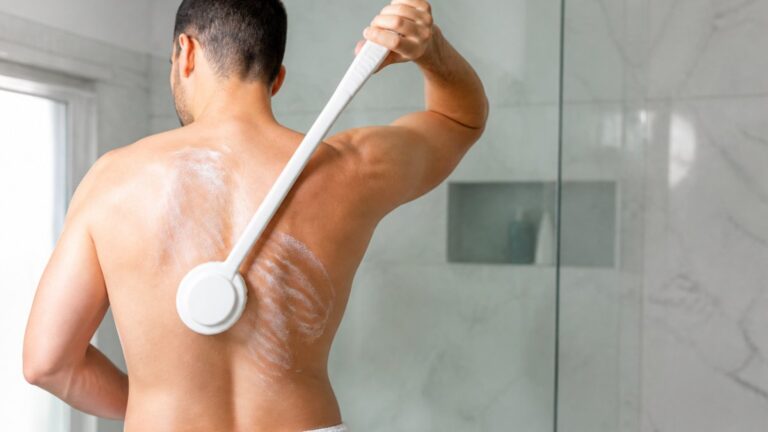
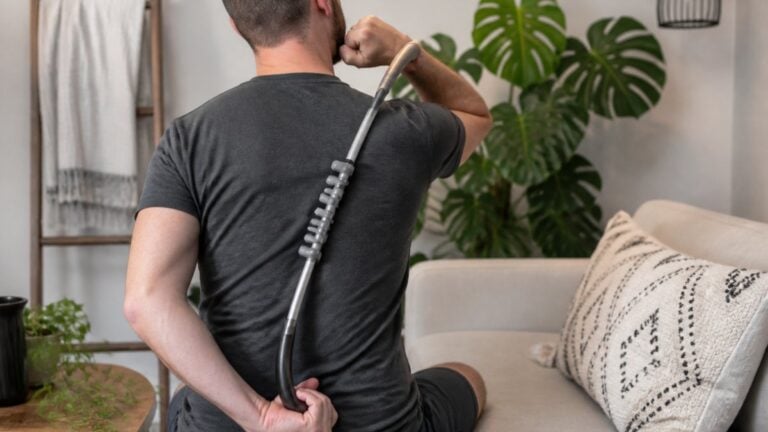
For areas you can’t reach, use a long-handled applicator. Many tools designed for this purpose work well. A simple long-handled sponge or applicator reaches the middle of your back easily.
Long-Handled Back Washer for Limited Mobility
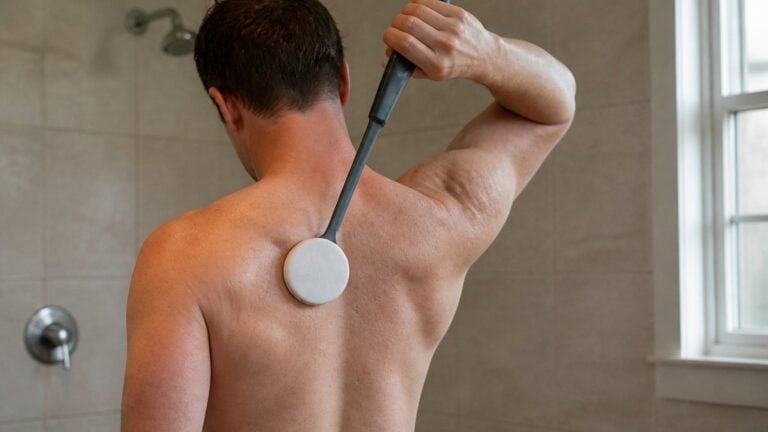
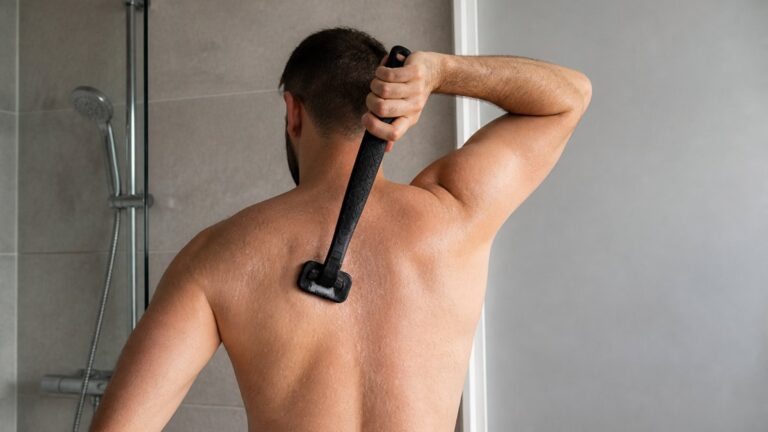
A long-handled back washer extends your reach without forcing your spine to twist. These tools transform daily hygiene from painful to manageable. The right tool makes a real difference in your independence.
What to look for in an effective back washer
The handle should be at least 16 inches long. This gives you enough reach to access your entire back.
The grip matters most. It should have cushioning and not slip when wet. An ergonomic grip reduces hand strain.
The washing surface should be gentle on skin. Soft materials work better than stiff ones. Look for tools with rounded edges that won’t scratch.
Check the angle adjustment. Some tools bend at fixed angles. Others adjust to multiple angles. Adjustable tools work better for reaching different back areas.
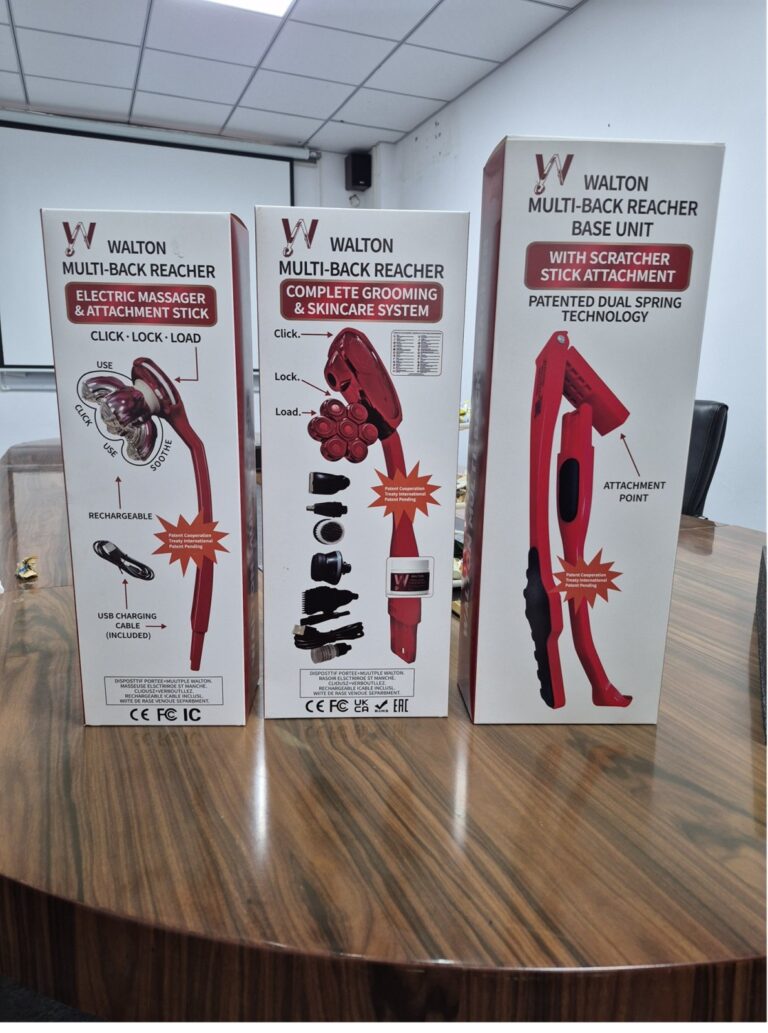
At Walton Multiback Reacher, we designed our system with these principles in mind.
How to use a long-handled tool safely and comfortably
Wet the tool and your back first. This reduces friction and makes washing easier. Start at your shoulders and work downward. Don’t scrub too hard.
Reach only as far as comfortable. Your tool extends your reach, but you still shouldn’t force movement. If reaching feels painful, you’re reaching too far.
Keep the tool at a consistent angle. Changing angles repeatedly gets tiring. Find the angle that reaches your target area and maintain it.
Rinse thoroughly after use. Soap residue can irritate skin. Pat dry or hang the tool to air dry. A wet tool becomes slippery and unsafe.
Adaptive Grooming Aids for Arthritis
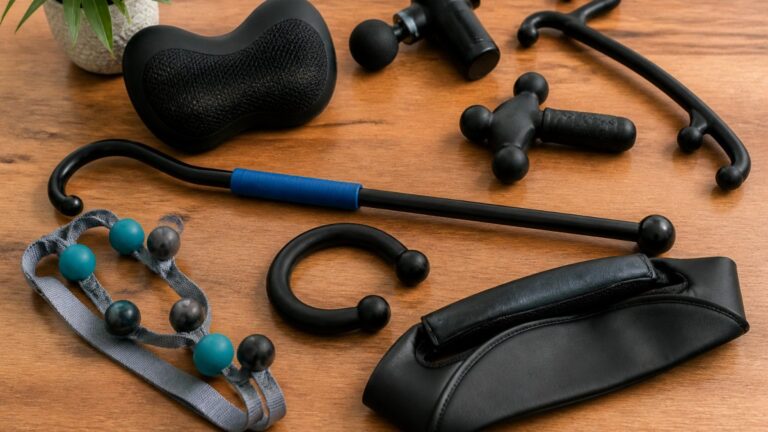
Beyond back washers, many adaptive tools help with grooming when arthritis limits your reach. These tools are designed specifically for people with limited mobility. They make daily grooming possible without help.
Ergonomic handles and grip features
Ergonomic handles reduce strain on arthritic hands. They’re wider and shaped to fit your palm naturally.
Textured grips prevent slipping. Smooth handles become dangerous when wet or soapy. Rubberized or textured surfaces stay secure in your grip. Some handles have built-in ridges for fingers to grip.
Soft padding cushions your hand. Hard plastic handles transmit vibration and pressure directly to your joints. Padded handles absorb shock and reduce joint stress.
Weight matters too. Heavy tools tire your arm quickly. Lightweight tools let you work longer without fatigue. But tools that are too light feel flimsy and hard to control.
Interchangeable attachments and multi-tool systems
Some tools accept multiple attachments. One handle works with different washing heads, brushes, or applicators. This saves money and storage space.
Interchangeable systems let you customize your tool. Use a soft brush for gentle cleansing. Switch to a firmer surface for exfoliation. Change to a lotion applicator for moisturizing.
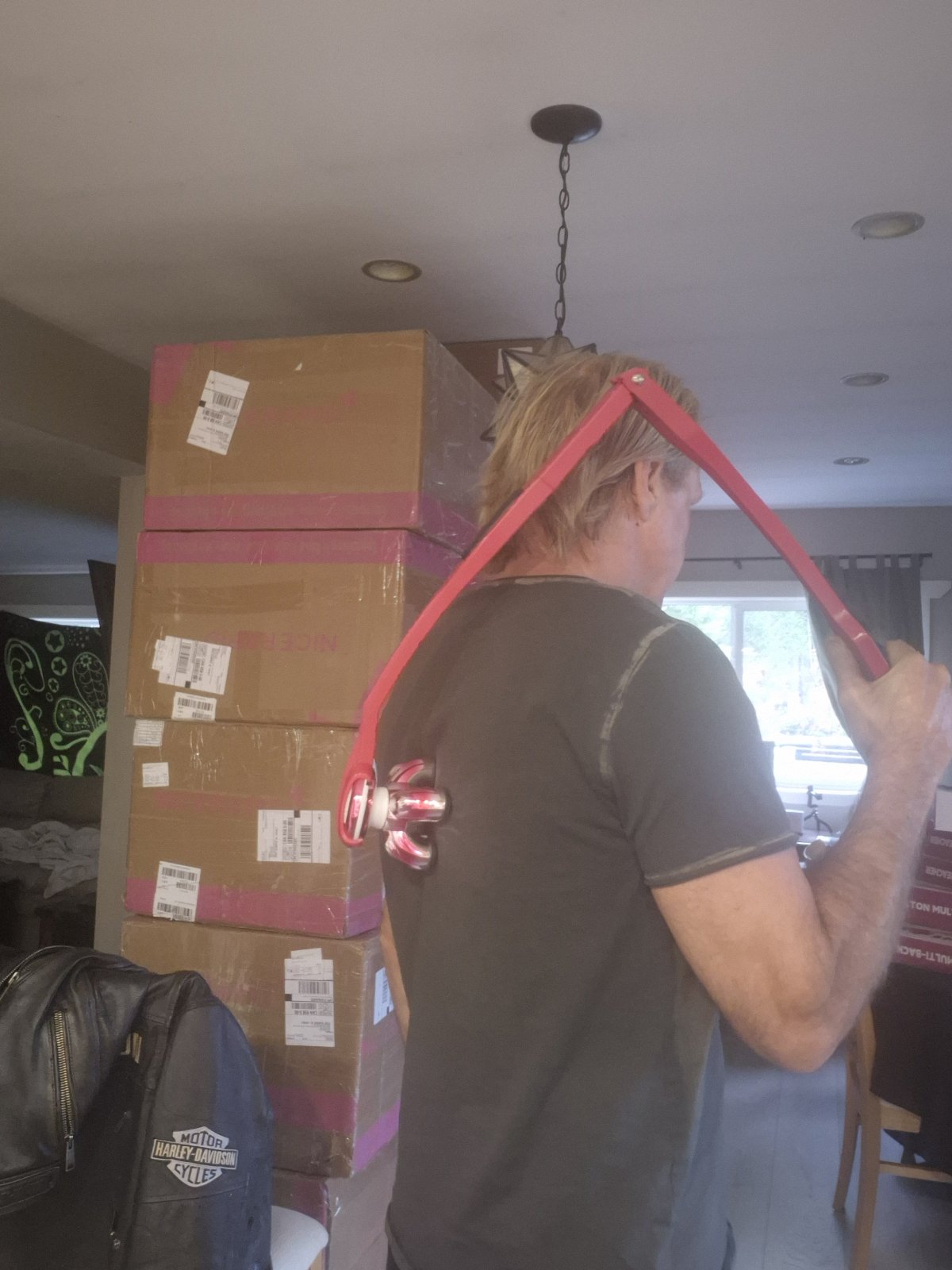
The Walton Multiback Reacher system uses this approach. Our base unit serves as the foundation for interchangeable attachments, including electric shavers, massagers, and skincare tools.
Quick-change connections make swapping attachments easy. You shouldn’t need tools to change attachments. A simple twist or click should do it.
Common Mistakes to Avoid When Reaching Behind Your Back
Learning how to reach back with arthritis means learning what NOT to do.
Don’t force maximum reach on your first try. Your body needs time to adapt.
Don’t twist your spine while reaching. Many people unconsciously twist their torso to reach farther.
Don’t hold your breath while reaching. Tension in your core muscles limits flexibility.
Don’t skip the warm-up. Cold muscles are stiff and prone to injury.
Don’t ignore sharp pain. Mild discomfort is normal. Sharp, shooting pain is a warning sign.
Don’t use tools that don’t fit your hand. An uncomfortable grip causes hand fatigue and reduces control.
When to Seek Professional Help and Red Flags
Some situations require professional evaluation. Knowing when to seek help prevents complications.
Seek professional help if pain worsens despite using proper technique. Increasing pain suggests inflammation or injury.
If your reach suddenly decreases significantly, get evaluated.
Numbness or tingling in your arms or hands needs evaluation. These symptoms can indicate nerve compression.
If you develop fever, chills, or severe swelling, seek immediate care.
Physical therapists can teach you specific exercises tailored to your situation.
Consider consulting a rheumatologist if you haven’t already. They specialize in arthritis and can optimize your treatment.
Reaching behind your back with arthritis doesn’t have to be impossible. Our patented base unit with its ergonomic silicone grip and interchangeable attachments gives you one comfortable tool that adapts to multiple grooming and body care needs.
Frequently Asked Questions
How can I reach my back if I have arthritis?
Use controlled reaching techniques that avoid twisting your spine. Stand upright, keep your shoulders relaxed, and move your arm slowly behind your back without forcing it. Long-handled tools with ergonomic grips make reaching easier by extending your reach without straining your joints. Start with small movements and stop if you feel pain. Adaptive grooming aids designed for arthritis provide additional support and reduce the strain on your back and shoulders.
What tools can help me wash or moisturize my back with arthritis?
Long-handled back washers, extended applicators, and adaptive grooming aids are specifically designed for people with limited mobility. Look for tools with ergonomic, injection over-molded silicone grips that are comfortable to hold for extended periods. Tools with interchangeable attachments allow you to switch between washing, moisturizing, and massage functions without needing multiple devices. Constant resistance during angle changes ensures the tool stays where you position it, making application more controlled and comfortable.
Can a long-handled back brush help with arthritis?
Yes, a long-handled back brush significantly reduces strain on your back and shoulders. It eliminates the need to twist or hyperextend your arms to reach difficult areas. Choose one with a soft bristle head to avoid irritating skin and a handle with a comfortable grip that doesn’t require excessive hand strength to hold. Ensure the brush head can be angled or adjusted to reach different areas of your back without you having to contort your body.
What movements should I avoid when reaching behind me with arthritis?
Avoid twisting your spine, hyperextending your arms, or forcing your shoulders into extreme positions. Don’t reach too quickly or jerkily, as this can trigger pain or inflammation. Skip repetitive reaching motions without breaks, and never push through sharp pain. Avoid arching your back excessively or leaning too far forward. Instead, use controlled, slow movements and take breaks between tasks. If a movement causes discomfort, stop immediately and try a different technique or tool.