How Can You Soothe Back Muscle Tension at Home?
Last Updated: November 2, 2026
Quick Summary
You can soothe back muscle tension at home with a 10-minute routine of gentle movement done in sequence: slow breathing and pelvic tilts lying down, then knee rolls and knee-to-chest, finishing with a standing forward bend and side reach. Add targeted stretches for the lower, middle and upper back, and use warmth for 15-20 minutes to relax the muscles.
- Back muscle tension is a prolonged, low-level contraction felt as stiffness, tightness or a deep ache rather than sharp pain.
- Hold knee-to-chest 20-30 seconds per side, and do pelvic tilts for 8-10 slow reps.
- Do 8-10 rounds of cat-cow, breathing out as you round and in as you arch.
- Stop immediately if a stretch causes sharp pain, numbness or tingling in a leg or arm.
- Apply warmth for 15-20 minutes, keep the heat source covered and never fall asleep on it.
Table of Contents
- Why Back Muscle Tension Builds Up (and What It Feels Like)
- A 10-Minute Immediate-Relief Routine for Back Muscle Tension
- Stretches for Lower Back Tightness That Target the Right Spot
- Middle-Back and Shoulder Tension: Cat-Cow, Child’s Pose, and Seated Stretches
- When Stretching Makes It Worse: What to Do Next
- Choosing the Best Back Massager for Home Use
- How to Tell Ordinary Tension From Something That Needs a Doctor
- Add the Multiback Reacher to Your Daily Relief Routine
- Frequently Asked Questions
Why Back Muscle Tension Builds Up (and What It Feels Like)
Most people treat back tightness as a mystery. It rarely is. Tension builds through a predictable mix of held posture, weak stabilizers, and stress, and it usually announces itself long before it becomes back pain.
Customers in their 40s and up often describe a dull ache between the shoulder blades, a lower back that feels “locked” after sitting, and a stiff morning that loosens only after moving around.
Back muscle tension is a state of prolonged, low-level contraction in the muscles supporting the spine, often felt as stiffness, tightness, or a deep ache rather than sharp pain.
What it feels like, in plain terms:
- A band of tightness across the lower back or mid-back
- Stiffness that eases with gentle movement
- Sore spots that feel better under pressure or warmth
- A pulling sensation when you twist or reach
The causes stack up. Long hours at a desk shorten hip flexors and load the lumbar spine. Stress keeps the upper back braced. Weak core muscles let the lower back do work it wasn’t built for. And as we age, muscles lose elasticity, so the same posture that felt fine at 30 leaves you stiff at 55.
That explains the why. Now here’s what to actually do about it.
A 10-Minute Immediate-Relief Routine for Back Muscle Tension
You don’t need an hour or a gym. Ten minutes of gentle movement, organized by body position, is enough to take the edge off most ordinary tension.
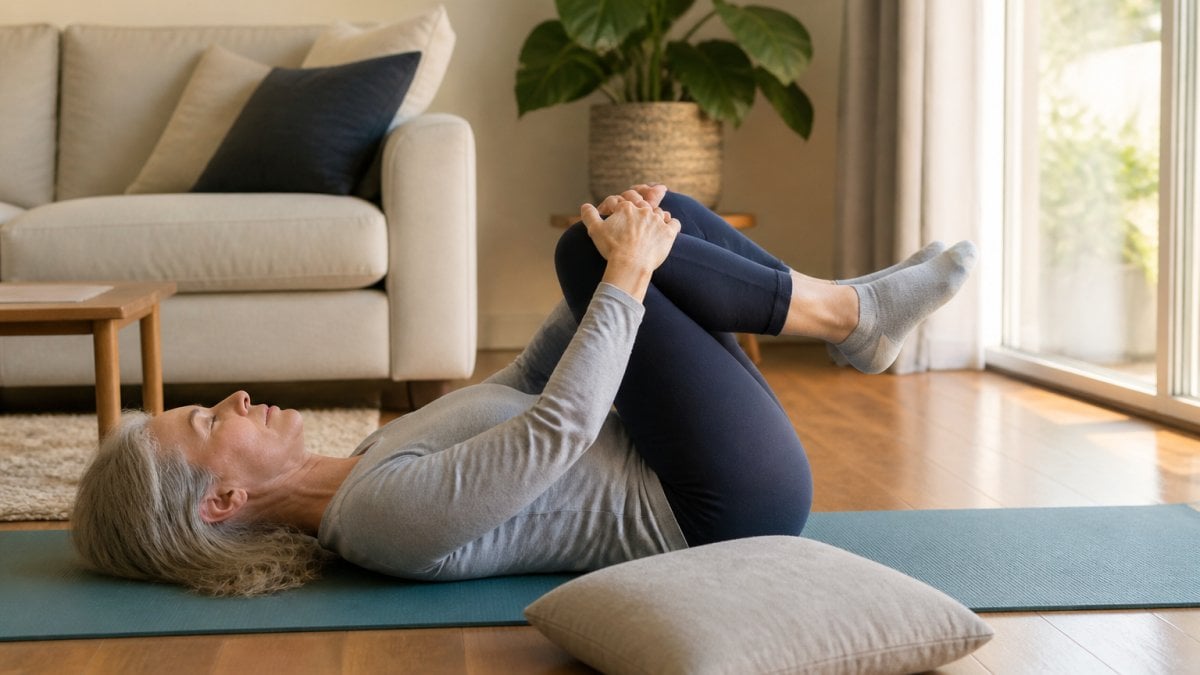
Minute-by-Minute: What to Do First
Start on your back, because it’s the easiest position to relax into.
- Minutes 1-2, lying down: Lie on your back, knees bent, and take slow breaths. Let the lower back settle toward the floor.
- Minutes 3-4, pelvic tilts: Gently flatten the lower back, hold for 3 seconds, release. Repeat 8-10 times.
- Minutes 5-6, knee rolls: Drop both knees slowly to one side, hold, return to center, then the other side.
- Minutes 7-8, knee-to-chest: Bring one knee toward your chest, hold 20-30 seconds, switch sides.
- Minutes 9-10, standing: Stand and do a slow forward bend and return, then a gentle side reach each way.
Watch out: don’t launch into this after hours of stillness without a minute of easy walking first. Cold muscles respond badly to sudden movement.
For a fuller at-home routine, see our guide to relieving back tension without help at home.
Stretches for Lower Back Tightness That Target the Right Spot
Not all lower back tightness comes from the same place. The right stretch depends on where the tension actually sits.
Knee-to-Chest, Pelvic Tilts, and Knee Rolls
These three cover most lower back complaints.
- Knee-to-chest: targets the lumbar spine and glutes. Hold 20-30 seconds per side.
- Pelvic tilts: wake up the deep core and mobilize the lower back. 8-10 slow reps.
- Knee rolls: release the sides of the lower back and the buttocks muscles. 5-8 per side.
The common mistake? Stretching hard into pain. A gentle stretch should feel like a mild pull, never a sharp catch. If you’re coming from a desk job, expect the hip flexors to be the real culprit, not the back itself.
Middle-Back and Shoulder Tension: Cat-Cow, Child’s Pose, and Seated Stretches
Middle-back tightness has its own logic. It usually comes from rounded shoulders and a forward head, so the stretches need to open the chest and mobilize the thoracic spine. Unlike lower-back tension, which often responds to floor work, mid-back tension frequently needs a combination of chest opening and spinal segmentation.
Start with the thoracic spine itself:
- Cat-cow: on hands and knees, alternate arching and rounding the spine slowly. Move segment by segment rather than hinging at one point. 8-10 rounds, breathing out as you round and in as you arch.
- Thread the needle: from hands and knees, slide one arm under the body palm-up, lowering the shoulder and upper back toward the floor. Hold 20-30 seconds per side. This targets the rotation that cat-cow can’t reach.
- Child’s pose with side reach: kneel, sit back toward the heels, walk both hands to one side, and hold 20-30 seconds before switching. This opens the lats and the side of the mid-back.
Then open the front of the body, because tight chest muscles pull the shoulders forward and keep the mid-back braced:
- Doorway chest stretch: place a forearm on a door frame at shoulder height, step through gently, and hold 20-30 seconds per side. Keep the ribs down rather than arching the lower back.
- Seated thoracic extension: sit tall in a chair, clasp hands behind the head, and gently lift the chest while keeping the lower back neutral. Hold 10-15 seconds, repeat 3-5 times.
Finish with a slow neck turn each way and a shoulder roll to release the upper traps, which often carry tension referred from the mid-back.
Watch out: if a mid-back stretch produces tingling or numbness into an arm, stop and reassess. That pattern suggests nerve involvement rather than ordinary muscle tension and warrants a professional opinion.
A common pattern is that desk workers need more chest opening and rotation, while people whose tension follows lifting or exertion need more gentle extension and rest between sets.
When Stretching Makes It Worse: What to Do Next
Sometimes stretching backfires. If a stretch sharpens the pain, sends it down a leg, or leaves you sorer the next day, stop and change approach.
Use these stop rules:
- Stop the stretch immediately if you feel sharp pain, electric shooting sensations, or numbness or tingling in a leg or arm.
- Ease off and reduce range if the stretch produces a mild pull that fades within a minute; that is usually ordinary muscle response, not a warning sign.
- Stop for the day if soreness the next morning is worse than before you stretched, or if the same stretch that felt fine yesterday now catches.
- Do not push through a stretch that makes symptoms travel farther from the spine; that pattern suggests nerve irritation rather than muscle tightness.
Watch out: pushing through a stretch that makes symptoms worse can turn mild tension into a longer flare, and repeated aggravation is the most common reason home routines fail.
What to do instead when stretching isn’t working:
- Switch to gentle movement rather than held stretches. A 5-10 minute walk or easy range-of-motion work often settles tension that stretching aggravates.
- Try supported positions: lying on your back with knees bent and a cushion under the head, or sitting with the back supported and feet flat, to let the muscles relax without loading them.
- Apply warmth for 15-20 minutes to relax the muscles and support blood circulation, keeping the heat source covered and never falling asleep on it.
- Return to stretching only when symptoms settle, and start with the gentlest option in your routine rather than the one that caused the flare.
If the pain persists beyond a week or two, keeps returning, or comes with weakness or numbness, it’s worth having a professional assess it rather than guessing.
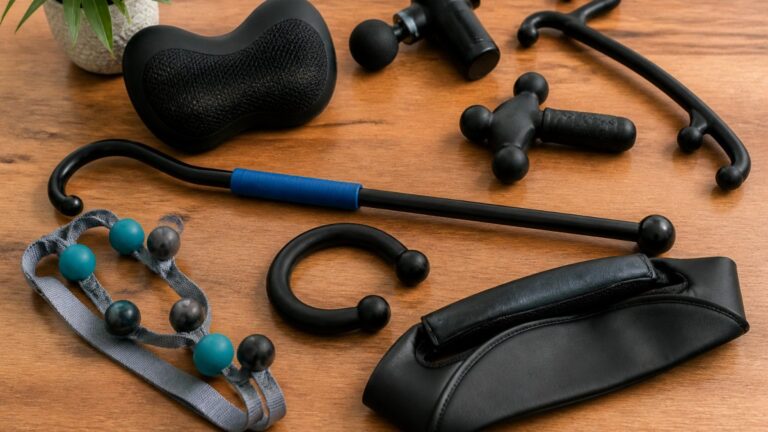
Choosing the Best Back Massager for Home Use
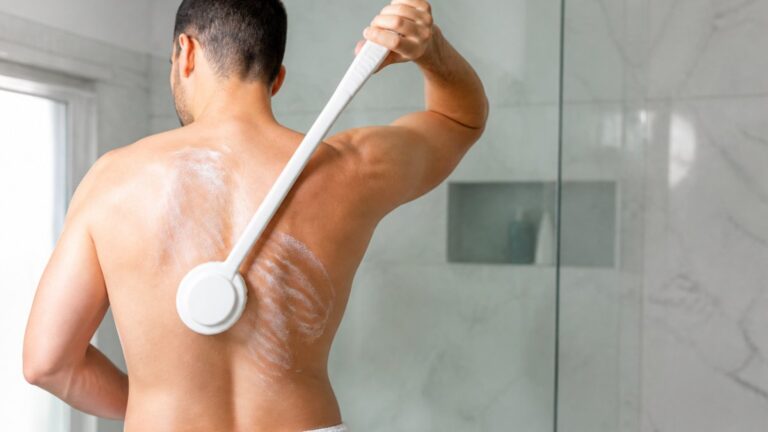
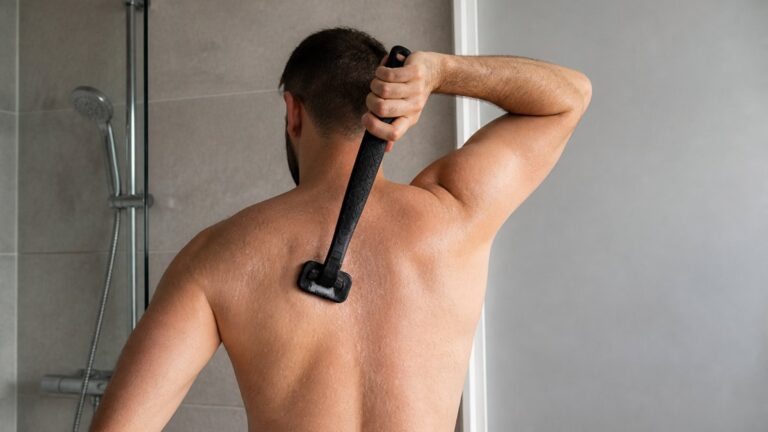
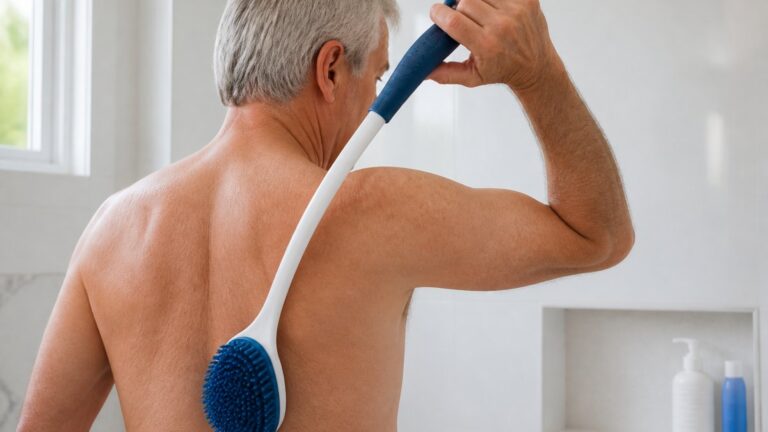
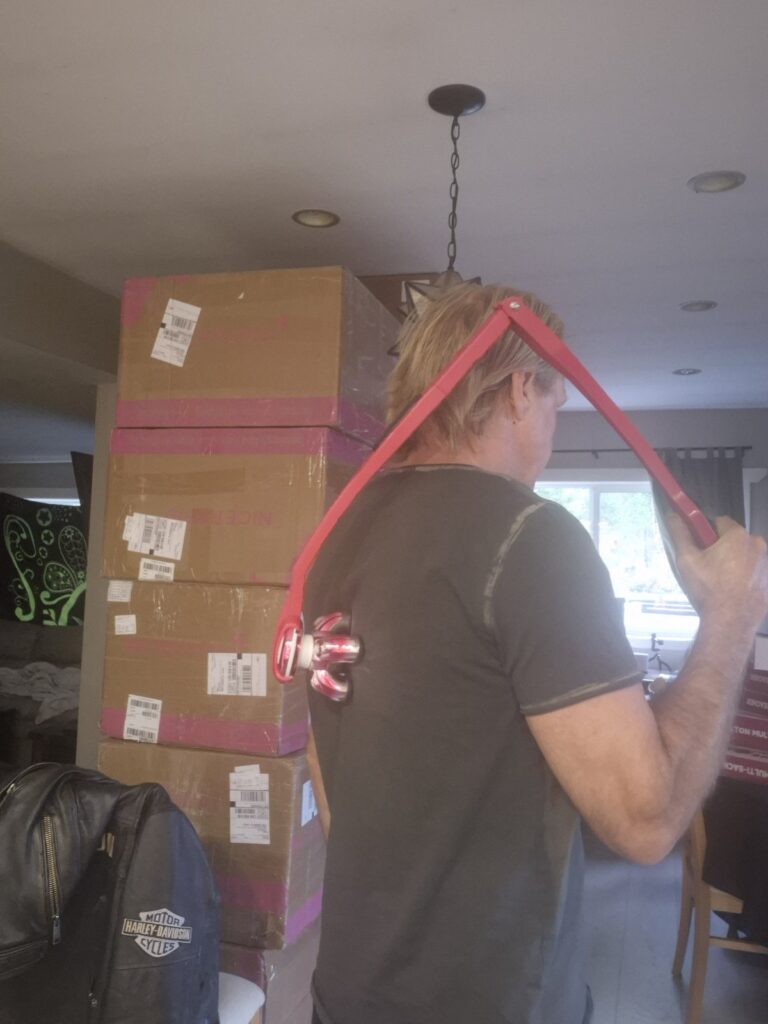
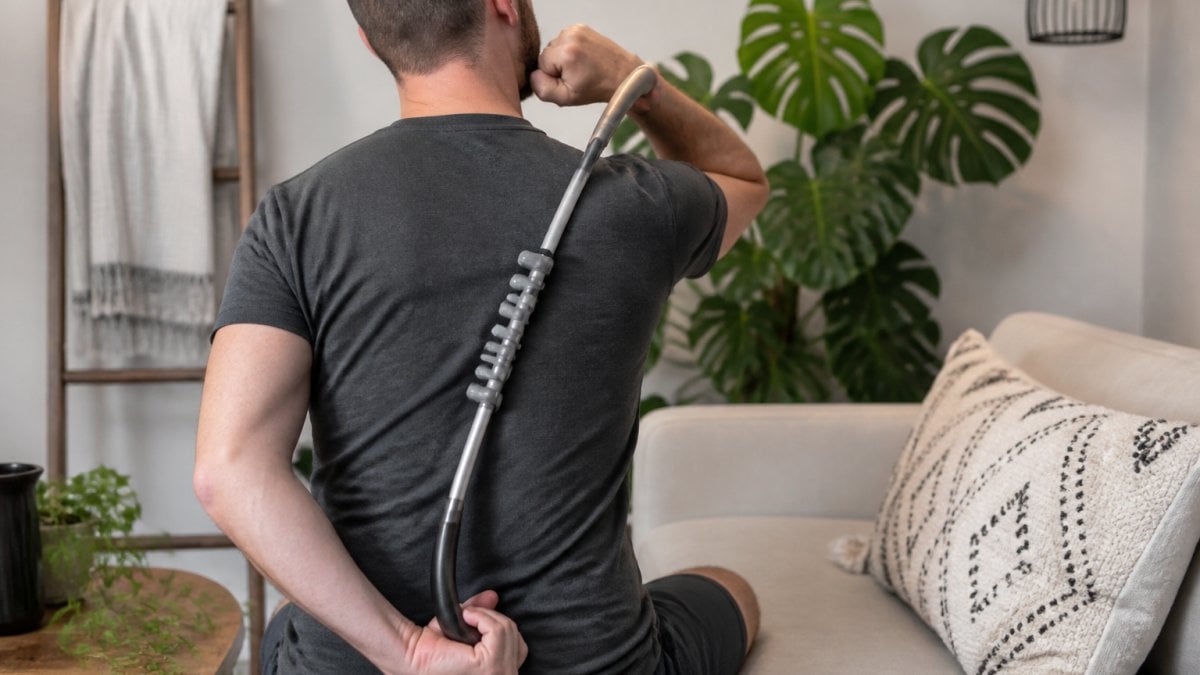
A good home massager solves the problem stretching can’t: reaching the spots you can’t comfortably get to yourself, especially the mid-back and between the shoulder blades.
When comparing options, judge them on four things:
| Feature | Why It Matters | What to Look For |
|---|---|---|
| Reach | Determines which areas you can treat alone | Full back and shoulder access |
| Grip | Comfort during longer sessions | Ergonomic, secure handle |
| Control | Pressure and angle adjustment | Constant resistance through angle changes |
| Versatility | Value beyond massage | Interchangeable attachments |
The Multiback Reacher is built around a patented design that holds constant resistance as you change angle, so you can reach the whole back without fighting a fixed handle. It features an injection over-molded silicone grip for reliable use.
If you’re still deciding which tool fits your needs, our guide on how to choose the right back care tool for you walks through the trade-offs, and our best back massager for home comparison breaks down the options side by side.
How to Tell Ordinary Tension From Something That Needs a Doctor
Most back tightness is ordinary and responds to movement, warmth, and rest. Some isn’t.
Seek medical assessment if you notice:
- Pain that follows a fall or injury
- Numbness, weakness, or tingling in a leg
- Loss of bladder or bowel control
- Fever alongside back pain
- Pain that wakes you at night or keeps worsening
For everyday tension, the guidance is consistent: Johns Hopkins Medicine on treating chronic back pain describes exercise-based physical therapy as the foundation of treatment, alongside posture changes and staying active. And TRICARE guidance on acute back muscle spasm cautions against lying or sitting without moving, noting that exercise may help muscles return to normal faster than rest alone.
A 2025 meta-analysis in PubMed Central compared exercise interventions for low-back pain, reinforcing movement as a core strategy rather than a passive one.
Add the Multiback Reacher to Your Daily Relief Routine
Stretching handles the muscles you can reach. A tool handles the rest, and that’s where daily consistency actually holds together.
The system starts with a base unit and adds interchangeable attachments, so one handle can support a range of self-care tasks. The patented design provides constant resistance during angle changes, and the injection over-molded silicone grip supports reliable use.
For product details and current availability, visit the Walton Multiback Reacher website.
Tension returns when the routine stops. Build the ten minutes in, keep the tool within reach, and your back stops being the thing you work around.
Get started with Walton Multiback Reacher and make daily back relief something you can actually keep up with.
Frequently Asked Questions
How can I loosen tight back muscles quickly at home?
Start with five minutes of gentle movement rather than sitting still. Lie on your back and do slow knee rolls, then pelvic tilts, holding each for 20 to 30 seconds. Follow with a knee-to-chest stretch and cat-cow on all fours. Apply heat for 10 to 15 minutes to improve blood circulation before stretching.
What are the most effective stretches for lower back tightness?
The knee-to-chest stretch, pelvic tilts, and knee rolls are the most direct options for lower back tightness because they move the lumbar spine through a small, controlled range of motion. Hold each gentle stretch for 20 to 30 seconds and repeat two to three times. Add child’s pose and cat-cow to address the middle back. Stop any stretch that sends pain down your leg or into your buttocks, and speak to a clinician if that happens.
How do I know if my back pain is muscle tension or something else?
Muscle tension typically feels like a dull ache or tight band that eases with gentle movement, heat, and stretching. Seek urgent assessment if you have numbness, weakness, loss of bladder or bowel control, pain after a fall, fever, or pain that travels below the knee. These signs point to nerve or structural issues rather than ordinary muscle tightness. When in doubt, get checked before starting any stretching routine.
Can ergonomic tools help with chronic back muscle stiffness?
Yes, when they let you reach areas your hands cannot. A long-handled massager with a secure grip can deliver targeted vibration therapy to the middle and lower back without straining your shoulders. Look for a tool with constant resistance during angle changes and a silicone grip. Pair tool use with daily stretches and strengthening exercises rather than relying on it alone.