
Do Back Shavers Really Work? An Honest Answer
Last Updated: November 1, 2026
Quick Summary
Yes, back shavers can work, but only within limits. They cut hair where the handle and blade angle let you position them, so coverage is the real catch rather than cutting power. Your shoulder mobility, the tool’s handle design and your technique decide the result.
- A rotary back shaver works well on broad, flat areas but becomes awkward on shoulders and hard-to-reach spots.
- Shave after a warm shower and work from your shoulders downward in slow, overlapping strokes.
- Back hair typically re-emerges as visible stubble within a few days to a week.
- Shaving cuts hair at the skin surface and does not slow regrowth or change hair density.
- Rinse and dry the blade head after every use and replace blades when they dull or show rust.
Table of Contents
- Do Back Shavers Really Work? What the Evidence Says
- What to Look For in the Best Back Shaver
- How to Shave Your Back by Yourself Without Help
- Back Hair Removal Methods Compared: Shaving, Waxing, Creams and Laser
- How Often to Shave Back Hair for Smooth Results
- Skin and Hair Type: Who Gets the Best Results
- Choosing Your Back Shaver Setup
- Frequently Asked Questions
Do Back Shavers Really Work? What the Evidence Says
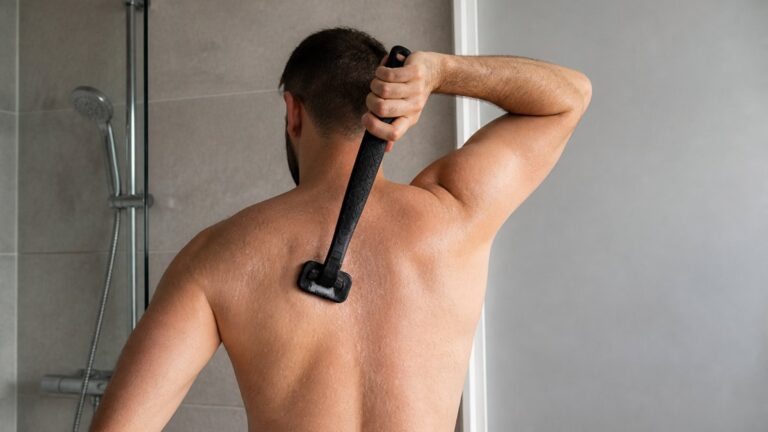
Yes, back shavers can work, but only within limits. A back shaver is a long-handled trimmer built to reach hair on your back without a second pair of hands. It cuts hair where the handle and blade angle let you position it. The catch is coverage, not cutting power. This guide from Walton Multiback Reacher breaks down what these tools actually do well, where they struggle, and how to get a smooth, hair-free back on your own.
The honest answer depends on three things: your shoulder mobility, the tool’s handle design, and your technique. Get those right and a back shaver handles routine maintenance at home. Get them wrong and you’ll spend twenty minutes contorting in front of a mirror for a patchy result.
Below, we’ll show you exactly how to shave your back by yourself, compare the main back hair removal methods, and set realistic expectations about regrowth and skin care. The core tension most guides ignore: a back shaver is a reach problem disguised as a shaving problem.
Where Back Shavers Fall Short
Reaching is the real bottleneck. A rotary back shaver can work well across broad, flat areas of the back, but it becomes awkward on shoulders and other hard-to-reach spots, as GQ’s review of back shavers notes. The tool doesn’t fail at cutting. It fails at angles.
A common mistake is assuming any trimmer will do. A standard beard trimmer held over the shoulder with help often “never does the job well,” according to one Reddit discussion among men over 30. That’s an individual anecdote, not a controlled test, but it matches what we hear from customers: blade angle and handle length decide the outcome.
Watch out: shaving blind over your shoulder without checking the mirror leads to nicks and uneven patches, especially on the shoulder blades and spine.
What to Look For in the Best Back Shaver
The best back shaver for most people combines a long, adjustable handle, a secure blade attachment, and a grip that stays comfortable during awkward angles. Prioritize reach and control over blade count.
Here’s what matters when choosing a back shaver:
- Handle length and angle control: You need to reach the mid-back and shoulders without straining. A fixed curved handle limits you; adjustable resistance during angle changes gives you more control.
- Attachment security: The blade head must lock firmly. A wobbly head causes nicks and missed patches.
- Grip comfort: A textured, over-molded grip matters if you have arthritis or reduced hand strength.
- Blade type: Rotary heads suit broad areas; foil and trimmer heads suit edges and shorter stubble.
Handle, Grip and Attachment Security
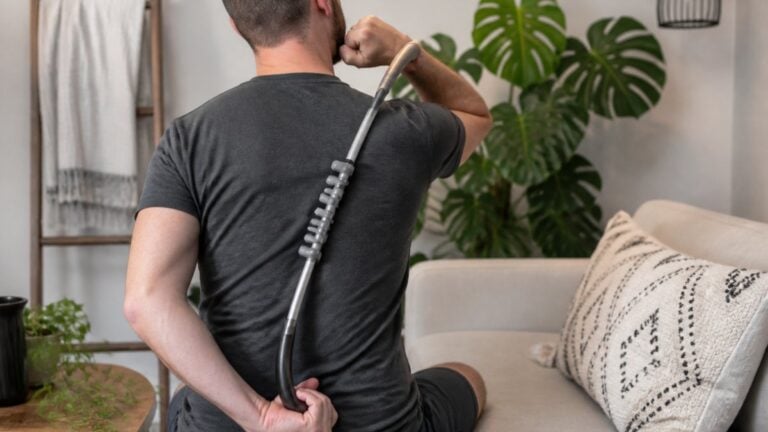
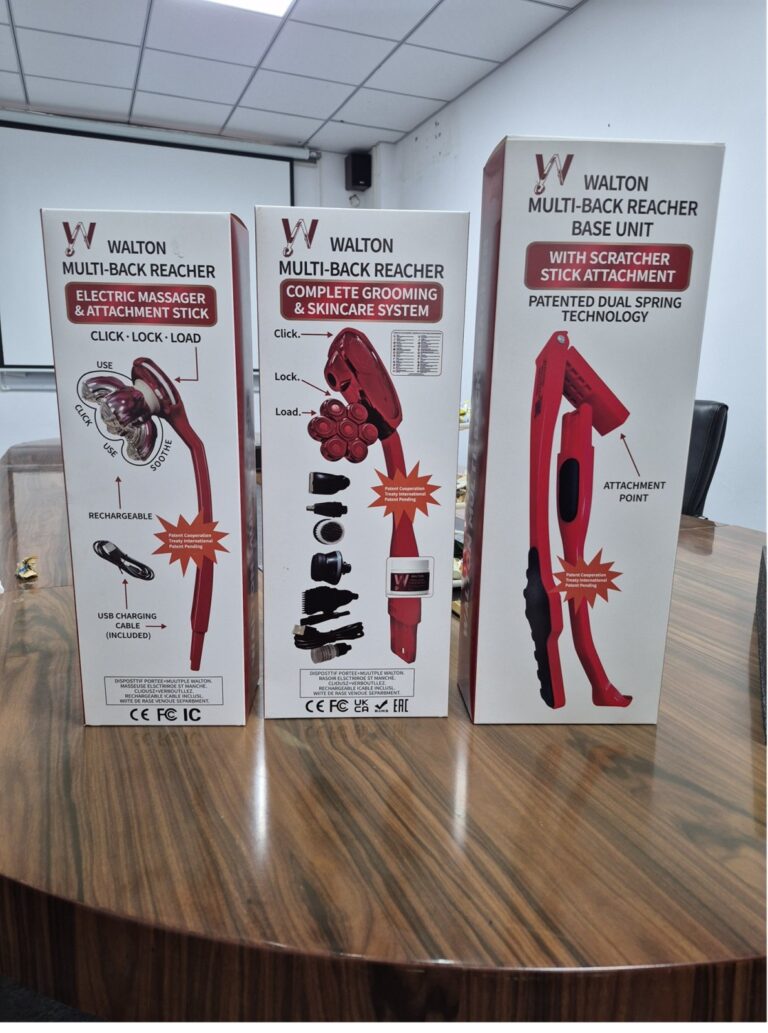
Grip and attachment security decide whether a back shaver is usable, not just sharp. If your hands tire or the head shifts mid-stroke, technique falls apart. This is where the Walton Multiback Reacher’s patented design is relevant: its base unit provides constant resistance during angle changes, so the head holds its position as you rotate. The injection over-molded silicone grip is designed for reliable use.
How to Shave Your Back by Yourself Without Help
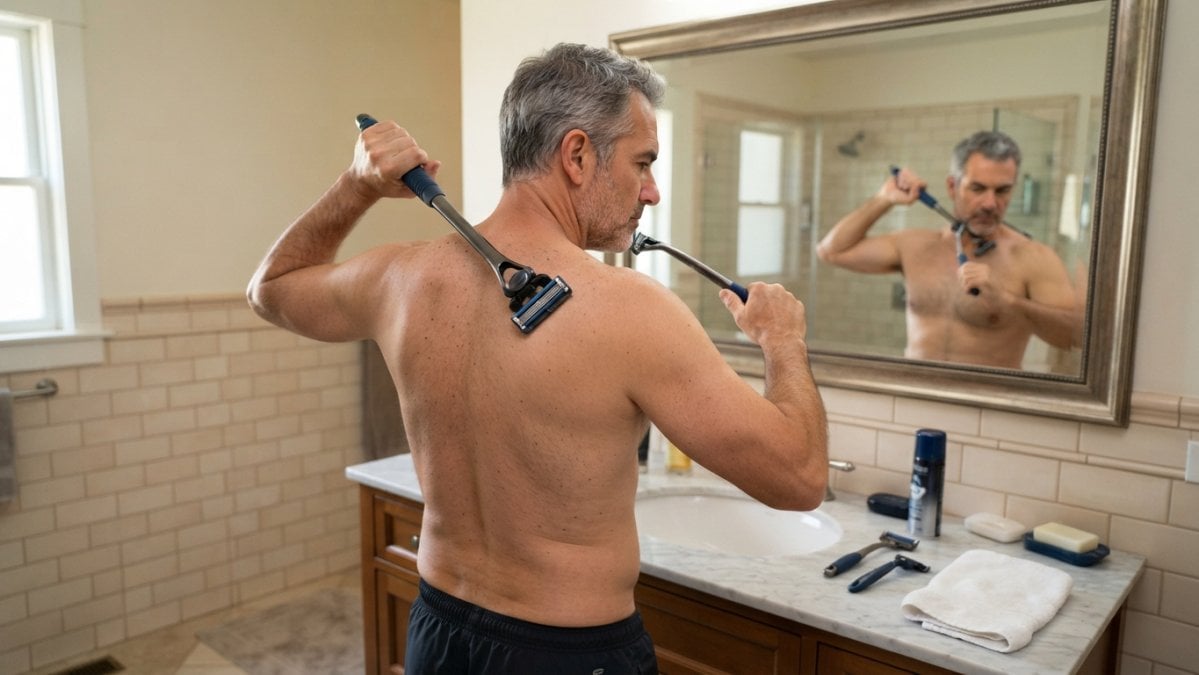
Shaving your back alone is possible with the right tool and a repeatable sequence. Follow these steps for a safer, closer result:
- Prep the skin. Shave after a warm shower, when hair is soft and pores are open.
- Dry and check. Pat dry, then use a mirror or a second mirror angle to map the areas you can and can’t reach.
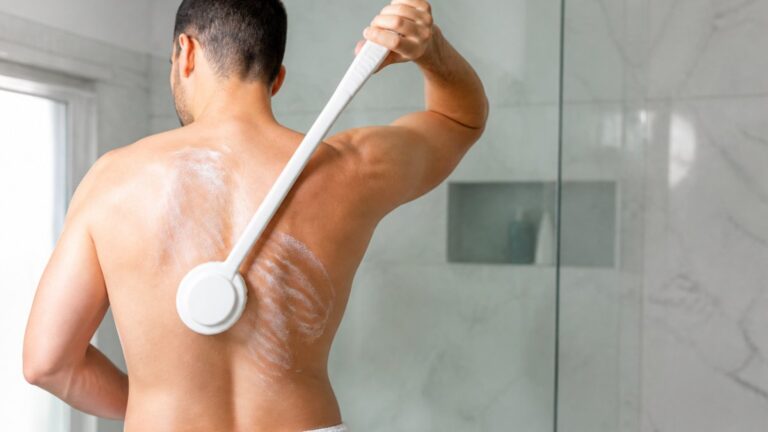
- Apply shave cream. A thin layer reduces irritation and razor bumps.
- Start at the top. Work from shoulders downward in slow, overlapping strokes.
- Check your angle. Keep the blade flat against the skin, not digging in.
- Rinse and inspect. Clear the blade often and check for missed patches.
- Moisturize. Apply lotion to calm the skin and reduce irritation.
If you want a deeper solo walkthrough, our guide on how to shave your back without help covers positioning and mirror setups in detail.
Back Hair Removal Methods Compared: Shaving, Waxing, Creams and Laser
Shaving is a common at-home method, but it’s not the longest-lasting. Here’s how the main back hair removal methods stack up:
| Method | Duration of Results | Pain Level | Best For |
|---|---|---|---|
| Shaving | Days | Low | Quick, routine upkeep |
| Waxing | Weeks | High | Longer gaps between sessions |
| Depilatory creams | Days to a week | Low | Sensitive skin, no blades |
| Laser | Months to long-term | Moderate | Longer-lasting reduction |
Shaving is convenient for routine upkeep. Waxing and laser last longer but typically require a professional for the back. Creams suit people who want to avoid blades but can irritate sensitive skin, so patch-test first.
For a full breakdown of each option, see our comparison of at-home back hair removal methods.
How Often to Shave Back Hair for Smooth Results
The right shaving frequency depends on how fast your hair grows and how smooth you want to stay. Back hair typically re-emerges as visible stubble within a few days to a week, so the interval that keeps you smooth is shorter than the interval that keeps you presentable.
Here is the mechanism most guides skip: shaving cuts hair at the skin surface. It does not pull the root, damage the follicle, or slow regrowth. That means the stubble you feel a few days later is the same hair growing back at its normal rate, now with a blunt tip instead of a tapered one. A blunt tip can feel rougher against fabric and skin than the original hair, which is why some people perceive regrowth as “thicker” even though the density and color have not changed. If you want longer gaps between sessions, you need a method that removes hair below the surface, such as waxing or an epilator, or reduces the follicle over time, such as laser.
A practical schedule looks like this:
- Once or twice a week for routine upkeep if you want to stay visibly smooth.
- The day before an event rather than the morning of, so any redness has time to settle.
- A rest day between sessions if your skin is sensitive; shaving more than every other day raises the risk of irritation and ingrown hairs.
- A patch test when you switch tools or blade heads, since a new head can change how much pressure and how many passes your skin tolerates.
If you shave weekly, mark the day in your calendar and treat it like any other grooming routine. Consistency matters more than intensity: a quick weekly pass with a sharp blade beats an aggressive monthly session that leaves your skin raw.
Aftercare matters as much as the shave. Moisturizing hard-to-reach skin keeps it calm and reduces bumps; our guide on how to moisturize a hard to reach back shows how to apply lotion evenly on your own. If you notice persistent redness, raised bumps, or ingrown hairs that do not resolve within a few days, stop shaving that area and let the skin recover before resuming.
Skin and Hair Type: Who Gets the Best Results
Skin and hair type change how well a back shaver performs, and most guides treat this as a footnote. It deserves its own section because the same tool can deliver a clean result on one back and a patchy, irritated one on another.
Coarse, dense hair. Rotary heads handle broad areas well, but dense hair may need multiple passes and more frequent blade cleaning. Work in slow, overlapping strokes and clear the head often; a clogged head drags and tugs instead of cutting.
Fine or sparse hair. This shaves quickly but is prone to irritation if you press too hard. Let the blade do the work and keep the angle flat against the skin. A light touch matters more than speed.
Sensitive skin. Use a sharp blade, a thin layer of shave cream, and a light touch. Shave after a warm shower when hair is soft, and avoid shaving over the same spot repeatedly.
Tendency toward ingrown hairs. Shave with the grain rather than against it, exfoliate gently between sessions, and moisturize. Do not pick at bumps.
Stop shaving and let the skin recover if you see spreading redness, raised tender bumps, or any sign of infection. A back shaver is a grooming tool, not a treatment for a skin condition. If you have eczema, psoriasis, or another condition on your back, check with a dermatologist before shaving regularly.
Hygiene is part of suitability. Rinse and dry the blade head after every use, replace blades when they dull or show rust, and do not share a back shaver with anyone else. A dull or dirty blade is one of the most common reasons a back shaver seems to “stop working” when the real problem is the edge, not the tool.
Choosing Your Back Shaver Setup
The right setup comes down to your mobility and how much maintenance you want. If you have full range of motion, a long-handle razor or basic back shaver may be enough. If stiffness or arthritis limits your reach, an adjustable, attachment-based system makes the job far easier.
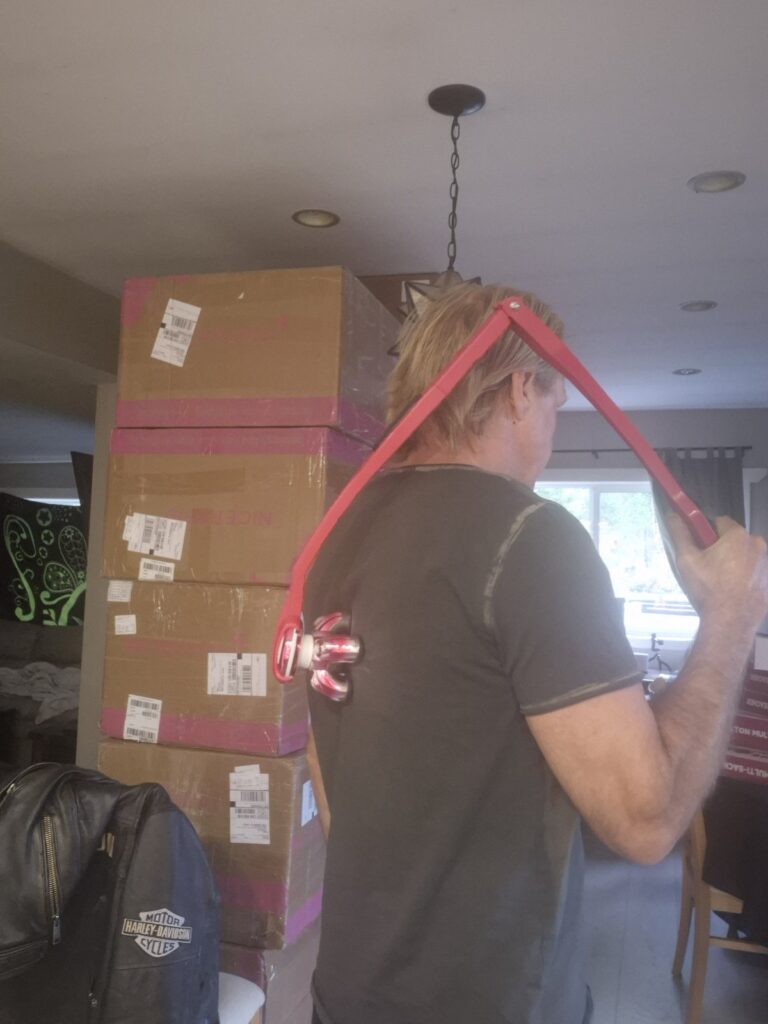
This is where the Walton Multiback Reacher earns its place. The base unit anchors a system of interchangeable attachments, including an electric shaver, massager, and skincare tools, so one handle covers shaving, muscle relief, and moisturizing. The constant-resistance design helps you hold a workable angle even when your shoulders won’t cooperate. You can add the electric shaver attachment to your setup and build from there.
Pricing depends on the configuration and attachments you choose, so check the website for current details.
Frequently Asked Questions
Do back shavers cause razor bumps or ingrown hairs?
They can, especially on sensitive skin or when you press too hard. Shave with the grain first, keep the blade clean, and avoid going over the same spot repeatedly. Exfoliating in the shower before you shave helps loosen hair and reduce irritation. If you are prone to ingrown hairs, a single-blade or electric back shaver tends to cause less trauma than a multi-blade razor pulled tight against the skin. Moisturise afterwards and give any bumps a few days to settle before shaving again.
Is a manual or electric back shaver better for hard-to-reach areas?
Manual long-handle razors can deliver a closer shave but demand more control and a steady grip. If you have limited shoulder flexibility, an electric model with a pivoting head and a secure grip reduces the contortions needed. Many people keep both: electric for routine upkeep, manual for a closer finish before an event.
How long does a back shave last before stubble shows?
How soon stubble shows depends on how fast your hair grows. If you want a hair-free back for a specific date, shave one to two days before rather than the morning of, which gives any redness time to calm down.
Can a back shaver give you a close shave on your own?
Yes, if the handle is long enough and the head angle holds against your back. The limiting factor is usually reach and control, not the blade. The Walton Multiback Reacher system offers constant resistance during angle changes. Go slowly in overlapping strokes, check your work in a mirror, and accept that a fully smooth finish may take a couple of passes.
The real challenge with back hair isn’t finding a blade, it’s reaching your back safely and consistently as your flexibility changes. That’s the problem Walton Multiback Reacher was built to solve. Our patented constant-resistance design, comfortable silicone grip, and interchangeable shaver, massager, and skincare attachments let you handle grooming and self-care without help. Get started with Walton Multiback Reacher and make back maintenance something you can do on your own.