How to Remove Back Hair: 5 At-Home Methods That Work
Table of Contents
- Back Hair Removal Methods Compared: Cost, Pain and Upkeep
- How to Remove Back Hair by Yourself Without Help
- How to Shave Your Back: Step-by-Step Technique
- Back Hair Removal Cream: How to Use It Safely
- Trimming, Waxing and Laser: What to Expect
- How Long Does Back Hair Removal Last?
- Preventing Ingrown Hairs and Razor Bumps
- Who Should Avoid Certain Methods or Seek Advice First
- Frequently Asked Questions
Last Updated: October 20, 2026
Back Hair Removal Methods Compared: Cost, Pain and Upkeep
Learning how to remove back hair starts with an honest look at the trade-offs. Every method asks you to trade money, pain, or time for smooth skin, and most people pick badly because nobody lays the options side by side.
At Walton Multiback Reacher, we build tools for people who want to handle back maintenance themselves, so we have a clear bias: at-home methods win on cost and convenience for most readers.
|
Method |
Cost |
Pain |
Time per Session |
How Long It Lasts |
|---|---|---|---|---|
|
Shaving |
Lowest |
None |
5-10 minutes |
1-3 days |
|
Trimming |
Low |
None |
5 minutes |
3-7 days |
|
Depilatory cream |
Low |
None to mild tingling |
10-15 minutes |
3-7 days |
|
Waxing |
Medium |
High |
20-40 minutes |
3-6 weeks |
|
Laser |
Highest |
Moderate |
15-30 minutes |
Months, with sessions |
The pattern is simple: the less pain and cost, the shorter the results. Pick the row that matches your patience and budget, not the one with the best marketing.
How to Remove Back Hair by Yourself Without Help
Removing back hair solo is entirely possible if you choose the right method and set up properly. Shaving, trimming, and depilatory creams all work without an assistant. Waxing your own back is technically possible but rarely clean, and laser needs a professional.
The hard part is not the technique. It is the reach. Your mid-back sits at the limit of most people’s shoulder flexibility, which is exactly where a long-handled tool earns its keep.
Three setup rules for solo removal:
- Work in a bathroom with bright, even lighting
- Keep a hand mirror positioned to check your mid-back afterward
- Have your tool and aftercare products within arm’s reach before you start
Mirror Placement and Tool Handling for Hard-to-Reach Areas
Most solo-removal failures come from bad mirror placement, not bad technique. A single hand mirror on the wall behind you gives a reversed view that is hard to work from.
When handling a long-handled tool, grip it like a golf club rather than a pencil.
A practical sequence for solo work:
- Set up both mirrors before you start and confirm you can see your mid-back clearly.
- Trim long hair first with a guard so the razor or cream has less to handle.
- Work from the outside of your back inward, since the edges are easiest to see and reach.
- Check coverage in the mirror after each pass rather than at the end.
- Keep a damp cloth within reach to wipe the tool and your hands.
If shoulder stiffness makes reaching difficult, an ergonomic handle with a longer reach changes the job from a struggle into a routine. That is the problem our patented reacher design was built to solve.
How to Shave Your Back: Step-by-Step Technique
Shaving your back takes about ten minutes and follows a fixed sequence. Get the order right and you avoid most irritation.
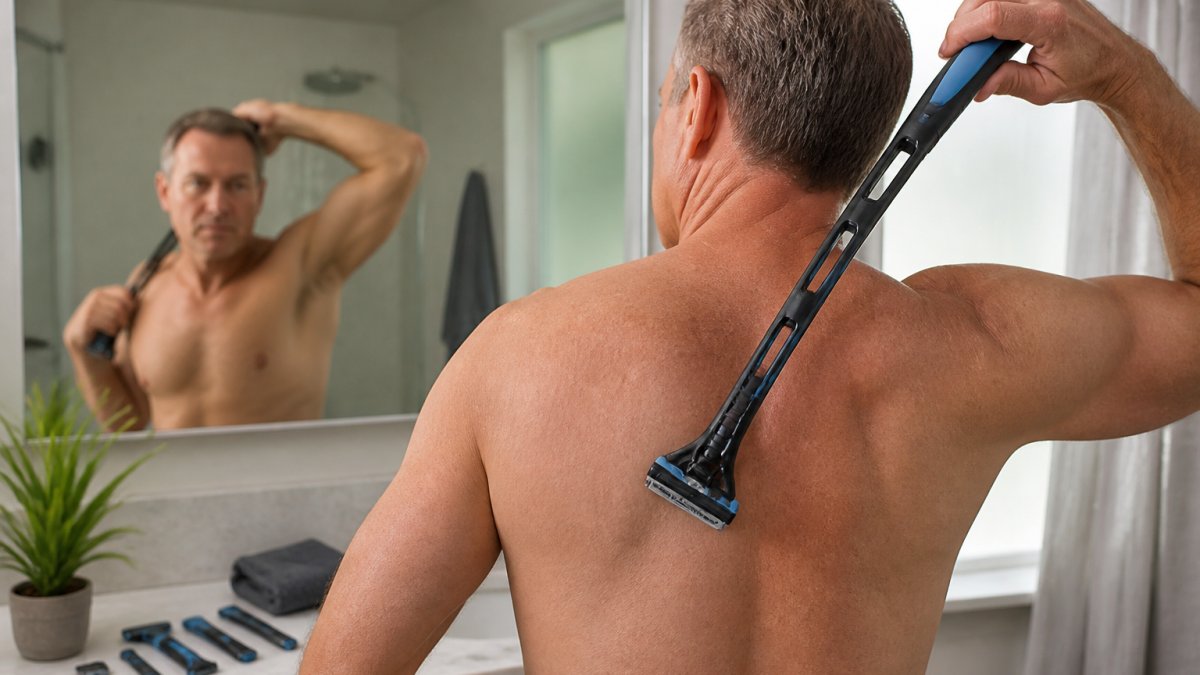
- Trim first if the hair is long. A razor clogs on anything much beyond a few millimetres.
- Shower and soften. Warm water for a few minutes softens hair and opens the skin.
- Apply shaving cream or gel. Never shave dry; dry passes cause razor burn.
- Shave with the grain first. Short strokes, rinse the blade often.
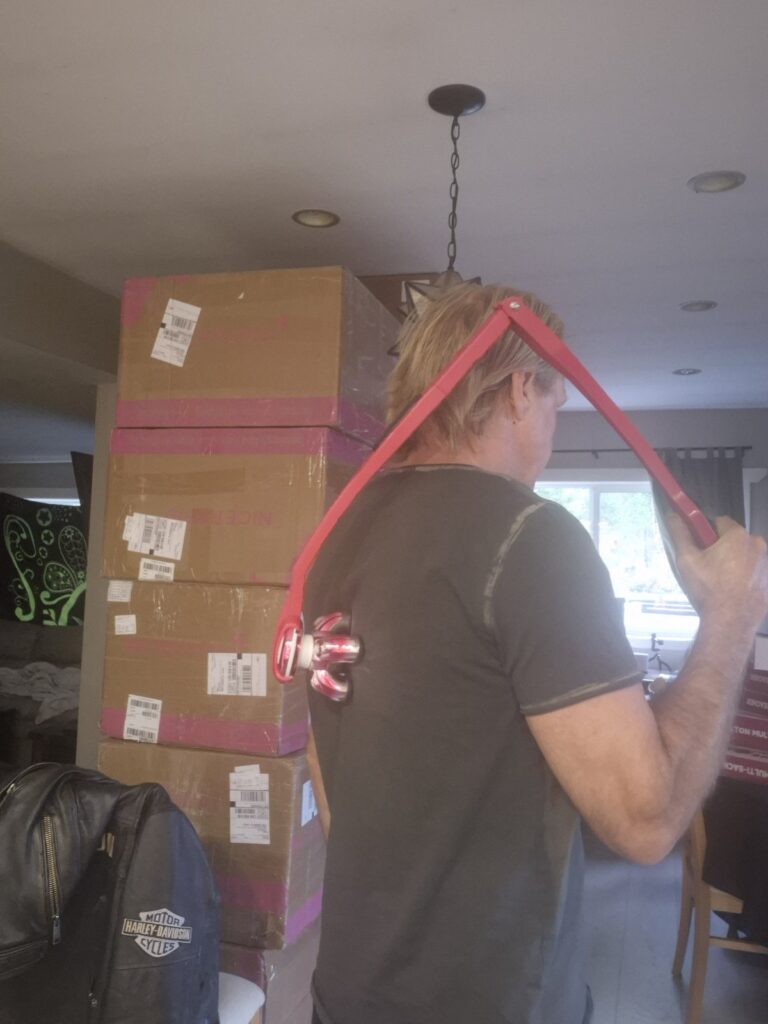
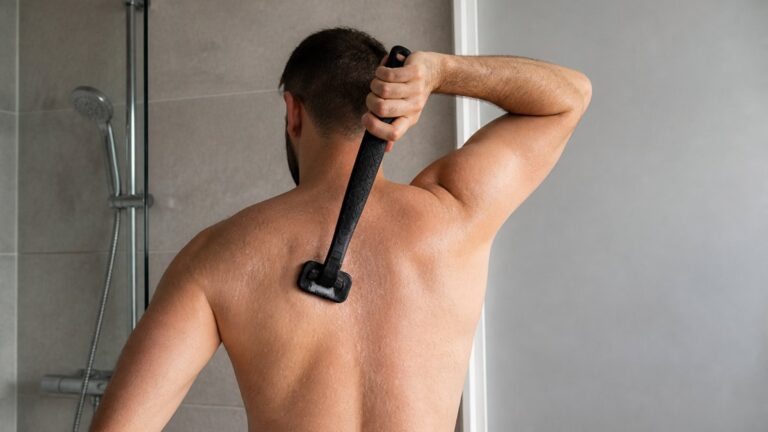
- Reach the middle with a long-handled tool. Hold it over your shoulder and let the handle do the work.
- Rinse with cool water and pat dry. Do not rub.
- Moisturise. A fragrance-free lotion calms the skin.
Using a Long-Handled Razor or Back Shaver
A back shaver is a razor mounted on a long handle, often with a pivoting head that follows the curve of your back.
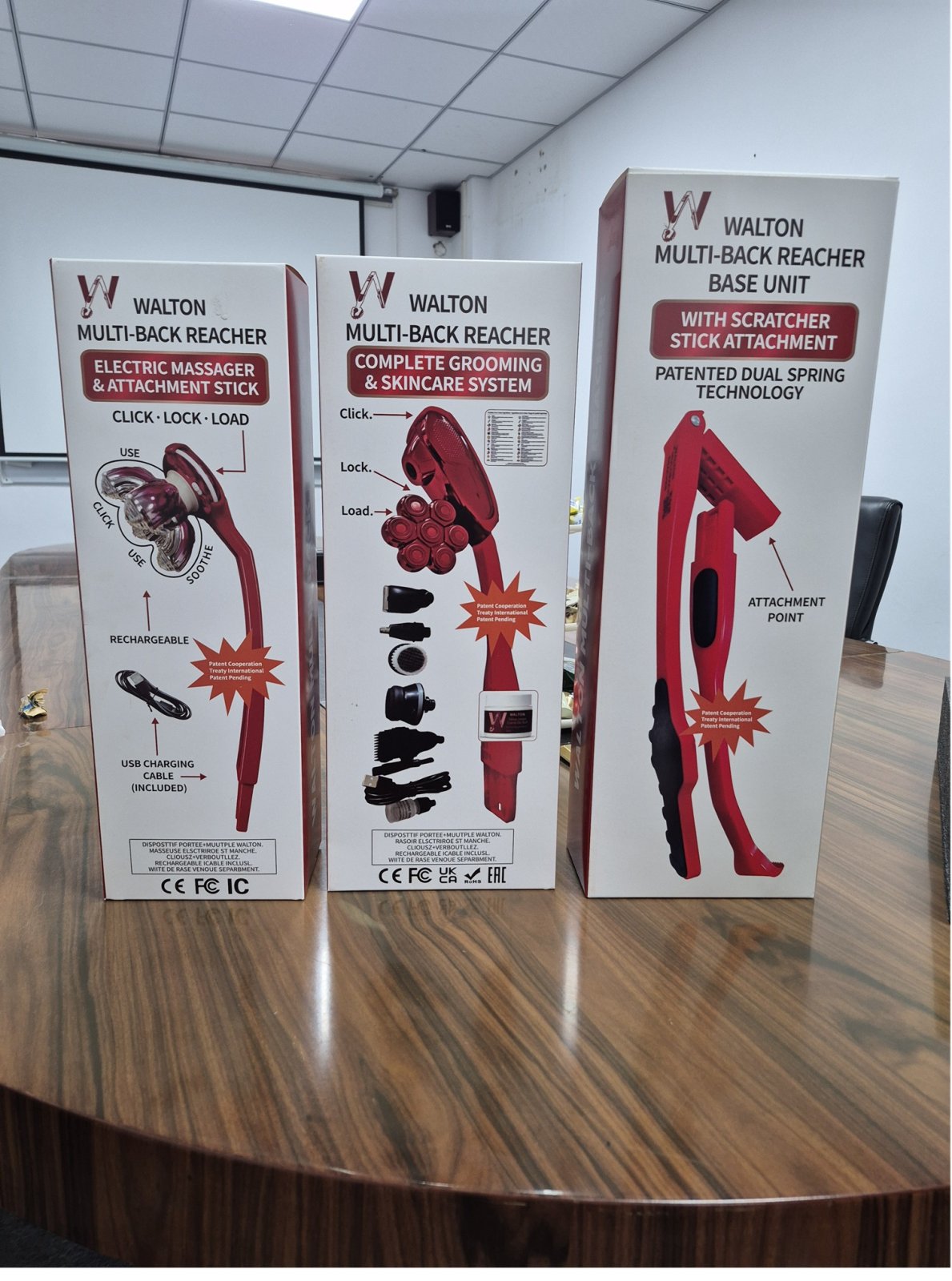
Our base unit uses constant resistance during angle changes, which keeps the attachment steady instead of flopping loose mid-stroke. The injection over-molded silicone grip helps here too, especially if your hands are stiff or arthritic. Change the blade or attachment before it dulls; a dragging blade is the most common cause of razor bumps.
Back Hair Removal Cream: How to Use It Safely
Back hair removal cream, also called depilatory cream, dissolves hair just below the skin surface using chemical agents. It is painless when used correctly and lasts roughly as long as a shave, but the safety rules are stricter than most people assume.
Application steps:
- Read the label and check the maximum leave-on time
- Do a patch test 24 hours before first use
- Apply an even layer with an application brush, working it into the hair
- Wait the stated time, then remove with a damp cloth
- Rinse thoroughly and apply a soothing, fragrance-free lotion
Patch Testing and Skin Sensitivity
A patch test is not optional. Apply a small amount to a discreet area, leave it for the full stated time, and rinse. If you see redness, burning, or a rash within 24 hours, do not use the product.
People with sensitive skin, eczema, or broken skin on the back should skip depilatory creams entirely. Never use them on moles, cuts, or irritated skin, and never leave them on longer than the label allows hoping for a closer result. Chemical burns from depilatories are painful and slow to heal.
Trimming, Waxing and Laser: What to Expect
Trimming is the safest entry point: an electric trimmer with a guard cuts hair short without touching the skin, so there is no irritation risk at all.
Waxing pulls hair from the root and delivers the longest-lasting at-home result, but the pain is real and the reach problem is worse. Most people need help with their mid-back, and waxing over a large area solo is messy.
Laser hair removal is the only semi-permanent option, but the word “permanent” misleads people. Laser works best on dark hair against lighter skin, requires multiple sessions spaced weeks apart, and needs a professional for your back.
Method-by-Method Trade-offs and Who Should Screen First
Each method asks you to trade something different. Trimming costs the least in irritation but leaves stubble within days. Waxing buys weeks of smoothness at the cost of pain and dependence on a second pair of hands.
Screening matters more than most guides admit. Depilatory creams are unsuitable for anyone with sensitive skin, eczema, or broken skin. Waxing should be avoided on skin being treated with retinoids or acids.
A common pattern among people who remove back hair regularly is to combine methods: trim or shave for quick maintenance, then book a professional wax or laser session when they want longer-lasting results.
How Long Does Back Hair Removal Last?
Back hair removal lasts anywhere from one day to several months depending on the method.
The reason is depth. Shaving and creams cut hair at or just below the surface, so regrowth appears quickly. Waxing removes hair from the root, so the follicle needs time to produce a new hair.
Regrowth cycles vary between people, and hair growth tends to slow with age, so your maintenance schedule will not match anyone else’s exactly. Track how many days you get from each method and plan around your own numbers.
Preventing Ingrown Hairs and Razor Bumps
Ingrown hairs and razor bumps come from hair curling back into the skin or from bacteria entering freshly shaved pores. Prevention is mostly about preparation and aftercare, not luck.
- Exfoliate gently a day before removal, not immediately before
- Always use shaving cream or gel, never a dry razor
- Shave with the grain and rinse the blade between strokes
- Wear loose clothing after removal to reduce friction
- Moisturise daily and exfoliate gently between sessions
- Treat existing bumps with a warm compress and leave them alone
If bumps persist, spread, or look infected, stop removing hair in that area and see a doctor or pharmacist. Persistent folliculitis is a medical issue, not a grooming one.
Who Should Avoid Certain Methods or Seek Advice First
Some methods carry real risk for certain people, and the right move is to ask before you try. Depilatory creams are unsuitable for anyone with sensitive skin, eczema, or broken skin.
Laser hair removal needs professional assessment for people with darker skin tones, since older laser types carried higher risk of pigmentation changes, and for anyone taking photosensitising medication.
Age-related stiffness and reduced shoulder mobility do not rule out at-home removal, but they do change which tool makes sense. An ergonomic handle with a secure grip and a pivoting head reduces the strain of reaching your mid-back, which matters more than blade count.
Back maintenance should not depend on someone else’s schedule or a monthly appointment. If shoulder stiffness has made reaching your back a chore, Walton Multiback Reacher was designed for exactly that problem: a patented handle that holds constant resistance through every angle change, an injection over-molded silicone grip that stays secure in stiff hands, and interchangeable attachments for shaving, massage, and skin care from one base unit.
Frequently Asked Questions
How can I remove hair from my back by myself?
The most practical solo options are a long-handled razor or back shaver, a depilatory cream applied with a long-handled brush, or an electric trimmer with an extended handle. A mirror set at an angle helps you see hard-to-reach areas. Work in sections and rinse the tool between passes. If your shoulders or hands limit your range of motion, a tool with a flexible head and a secure grip makes it easier to reach the middle of your back without twisting.
What is the easiest way to remove back hair at home?
For most people, shaving with a long-handled razor is the fastest route: a few minutes in the shower, no waiting time and no chemical risk. Hair removal cream is quicker to apply but needs a patch test 24 hours ahead and a full wait time before rinsing. Trimming is the lowest-irritation option but leaves visible stubble. Waxing gives the longest at-home result, though it is harder to do alone and hurts more.
How long does back hair removal last?
Shaving lasts roughly one to three days before stubble shows. Hair removal cream gives a similar window, often two to four days. Waxing pulls hair from the root and typically keeps the back smooth for two to four weeks. Laser hair removal needs a course of treatment sessions and produces long-lasting reduction rather than permanent removal, with occasional top-ups. Regrowth speed varies with your hair growth cycle and hormones.
How do you prevent irritation after removing back hair?
Rinse with cool water, pat dry and apply a fragrance-free moisturiser. Avoid tight clothing and heavy sweating for the rest of the day. For shaving, use a sharp blade and shave in the direction of hair growth to reduce razor bumps. If you used a cream, follow the label’s aftercare instructions and skip exfoliating for 24 hours. Mild redness usually settles within a few hours; persistent rash or breakouts need a pharmacist’s advice.
Should a woman shave her back?
Shaving is safe for anyone, and many women prefer it for speed and low cost. The trade-off is fast regrowth and possible stubble. Creams, waxing and laser work equally well on finer or lighter hair, though laser is most effective on dark hair against lighter skin. If hair is coarse, sudden or accompanied by other changes, speak to a doctor before treating it, as hormonal factors can drive back hair growth.
Is laser hair removal on the back permanent?
Laser treatment reduces hair growth significantly but is not guaranteed permanent. Most courses involve several sessions spaced weeks apart, and many people need occasional maintenance sessions afterward. Results depend on hair colour, skin tone and the treatment setting. It costs more upfront than shaving or creams, so weigh the per-session cost against the years of regrowth you would otherwise manage at home.