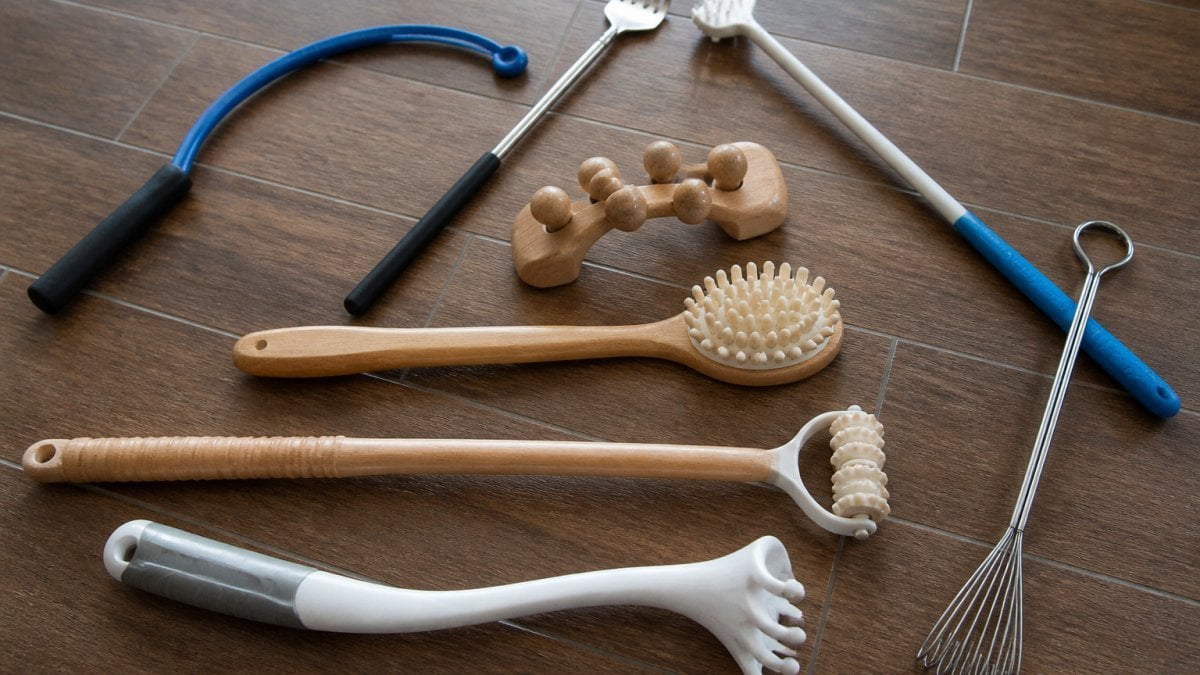
9 Best Tools for Reaching Your Back
Quick Summary
The best tool for reaching back depends on the task: a reacher grabber suits retrieving items from the floor or high shelves, a long-handled applicator suits lotion on the back, and a long-handled scrubber or electric shaver suits washing or shaving. Match the tool to your most frequent task, then compare reach length, trigger force and grip material before buying. Arthritic hands need low trigger force and wide, soft handles.
- A 32-inch reacher grabber suits most household pickup tasks.
- Stiff triggers are the most common complaint from people with sore hands.
- Test the trigger squeeze and hold the tool for a full minute before buying.
- For arthritis, trigger force matters more than reach length.
- Do not use a grabber to lift heavy objects; most are designed for light items.
Table of Contents
- Which Tool Fits Which Back-Reaching Task
- The Best Reacher Grabbers for Everyday Household Retrieval
- Back Scrubber With Long Handle Options for Washing
- Long-Handled Lotion Applicator for Hard-to-Reach Areas
- Back Self-Care Tools for Arthritis and Limited Grip
- Electric Back Shaver and Walton Multiback Reacher Attachments
- Safety Tips and Choosing Your Back-Reaching Tool Today
- Frequently Asked Questions
9 Best Tools for Reaching Your Back
Last Updated: November 3, 2026
Reaching the middle of your back is harder than most people expect, and the problem gets worse with age, stiff shoulders, or arthritis in the hands, which is why many people look for tools that make reaching back easier. This guide compares the main categories of back-reaching tools, explains which task each one suits, and points out where each falls short. We have kept the claims to what the supplied product details support, so you will see qualified language where current specifications or prices were not available.
Which Tool Fits Which Back-Reaching Task
A reacher grabber, a long-handled applicator, and an electric shaver solve different problems, so the right choice starts with the task. Picking up a dropped sock calls for a grabber, since reaching back down to the floor is the hardest part of that task.
Ask three questions before you buy: What am I reaching for? How much grip strength do I have? Will I use it daily or occasionally? For a deeper look, read how to choose an ergonomic back groomer.
The Best Reacher Grabbers for Everyday Household Retrieval
Reacher grabbers are the most common back-reaching tool, and they are the category most top roundups lead with. They extend your reach so you can retrieve items from the floor, high shelves, or behind furniture without bending or twisting.
Most reacher grabbers share a basic design: a long shaft, a trigger that closes the jaws, and a gripping head. What separates a good tool from a frustrating one is not the brand name but five measurable features.
- Reach length. Measured from the handle to the tip of the closed jaws. A 32-inch tool suits most seated and standing household pickup; longer tools (around 40 inches and up) help with high shelves and reduce bending, but they are heavier and harder to control in tight spaces.
- Jaw span. The maximum opening between the jaws. A narrow jaw struggles with bulky items such as a folded towel or a shoe; a wider span handles more shapes but can be clumsier around small objects.
- Grip force and trigger force. Grip force is how firmly the jaws hold an object; trigger force is how hard you must squeeze. A stiff trigger is the most common complaint from people with sore hands, so test the squeeze before you buy.
- Load capacity. Most household reachers are designed for light items. Check the stated limit rather than assuming, and never use a grabber to lift anything heavy.
- Tip and jaw material. Rubberized or silicone tips hold smooth objects such as a phone or a pill bottle better than bare plastic; magnetic tips help with small metal items such as keys or screws.
Matching the Grabber to the Task
A single grabber rarely excels at everything, so match the tool to what you do most often.
- Floor pickup and dressing. A medium-length grabber with a wide jaw and rubberized tips handles socks, slippers, and dropped laundry.
- High shelves. A longer fixed or telescopic model reaches top shelves without a step stool. Lock the extension fully before lifting.
- Small or awkward items. A rotating head lets you turn the jaws to match the angle of an object that sits sideways or behind a barrier; Magnetic tips help with keys and screws.
- Outdoor litter and yard pickup. A heavier-duty model with a sturdier shaft and firmer jaws tolerates repeated use on rough ground better than a lightweight folding tool.
Folding and Telescopic Models
Folding and telescopic models are easier to store than fixed-length tools.
The tradeoff with telescopic designs is that joints and locking mechanisms can loosen with heavy use. Lock the extension fully before you lift anything heavy, and check the lock each time you extend the tool.
Rotating Heads and Flexible Designs
Rotating heads let you turn the jaws to match the angle of an object, which helps when the item sits sideways or behind a barrier.
Rotating and flexible heads add moving parts.
Watch out: A grabber that feels comfortable in the first minute can cause hand fatigue after repeated squeezes.
The five features that separate a good reacher grabber from a frustrating one are listed below, with what each one means in practice.
| Feature | What it measures | Practical note |
|---|---|---|
| Reach length | Handle to tip of closed jaws | 32 in suits most household pickup |
| Jaw span | Maximum opening between jaws | Wide span handles bulky items |
| Trigger force | Squeeze needed to close jaws | Stiff trigger causes hand soreness |
| Load capacity | Stated weight limit | Designed for light items only |
| Tip material | Rubber, silicone or magnetic | Rubber holds smooth objects better |
Back Scrubber With Long Handle Options for Washing
A back scrubber with a long handle lets you wash areas you cannot comfortably reach with your hand. Look for a handle long enough to span your back from either shoulder, a soft or medium-firm scrubbing surface, and a grip that stays put when wet.
Soap and water are the main variables in shower use, so choose a material that drains well and dries quickly. A scrubber that stays wet between uses can grow bacteria, so hang it to dry after each shower.
Long-Handled Lotion Applicator for Hard-to-Reach Areas
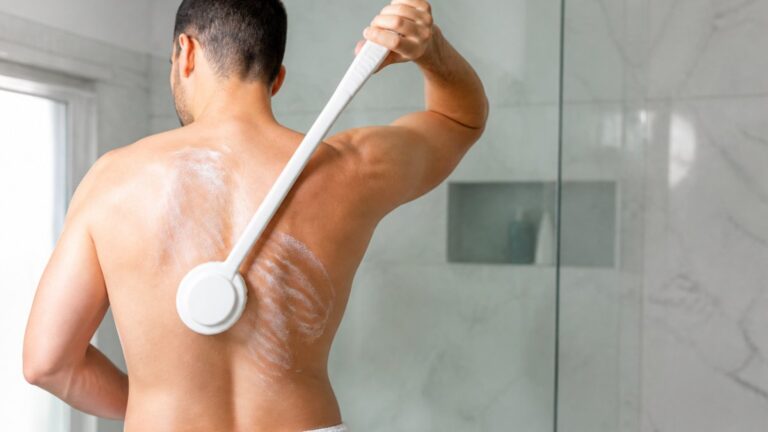
A long-handled lotion applicator solves a different problem: it places moisturizer on your back without requiring you to bend or twist.
Apply lotion to damp skin right after showering, and use a long-handled applicator to cover the shoulder blades and the lower back, where most people miss.
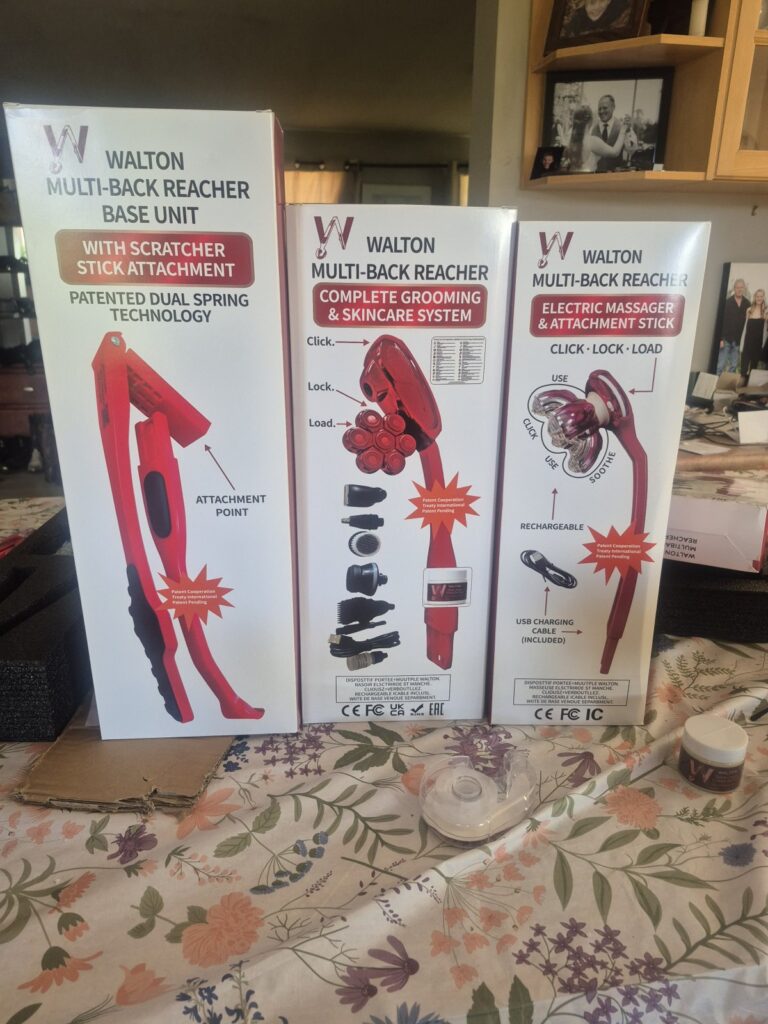
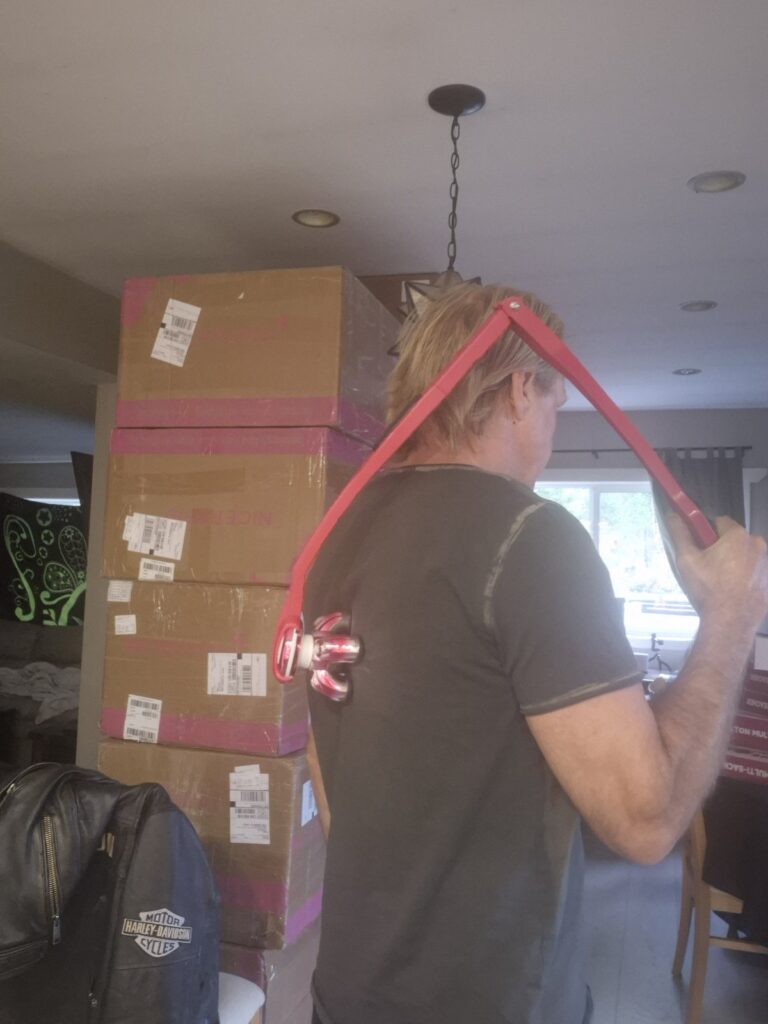
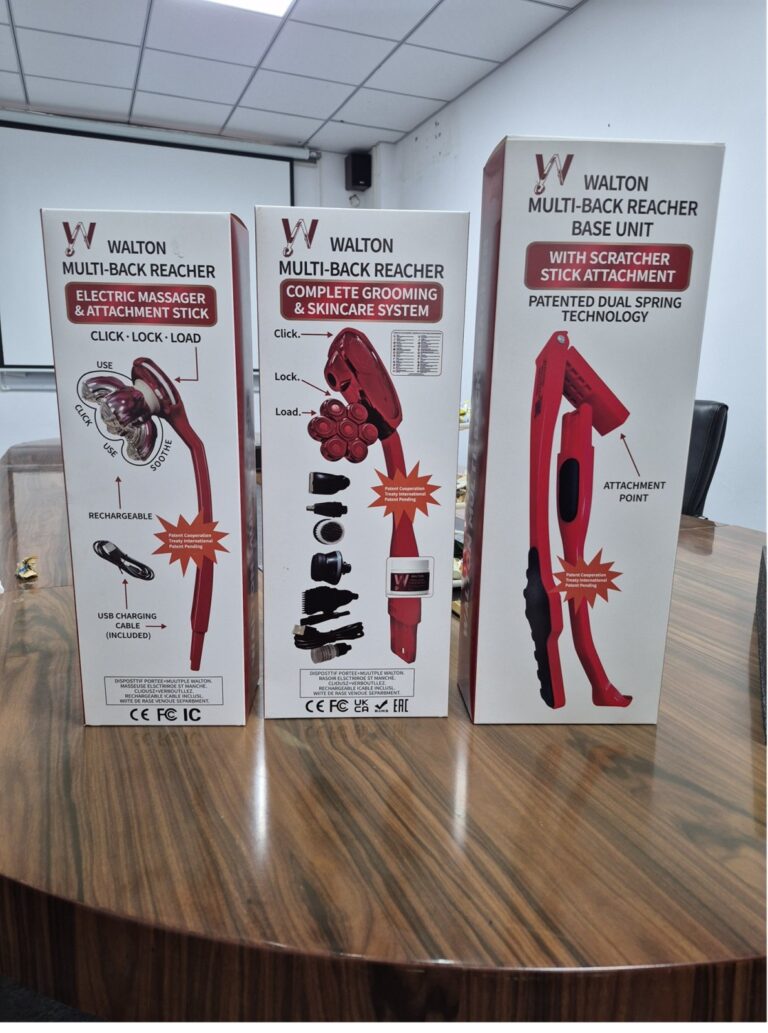
The Walton Multiback Reacher base unit uses an ergonomic silicone grip and supports interchangeable attachments. For current specifications and pricing, check the Walton Multiback Reacher website or request a quote before you decide.
Back Self-Care Tools for Arthritis and Limited Grip
If you have arthritis, tremor, or weak grip, the tool that works for a healthy adult may be unusable. Our step-by-step guide on reaching your back with arthritis explains how to adapt your routine. Most roundups treat this as a footnote; it deserves its own buying criteria, because hand function matters more than reach length for this group.
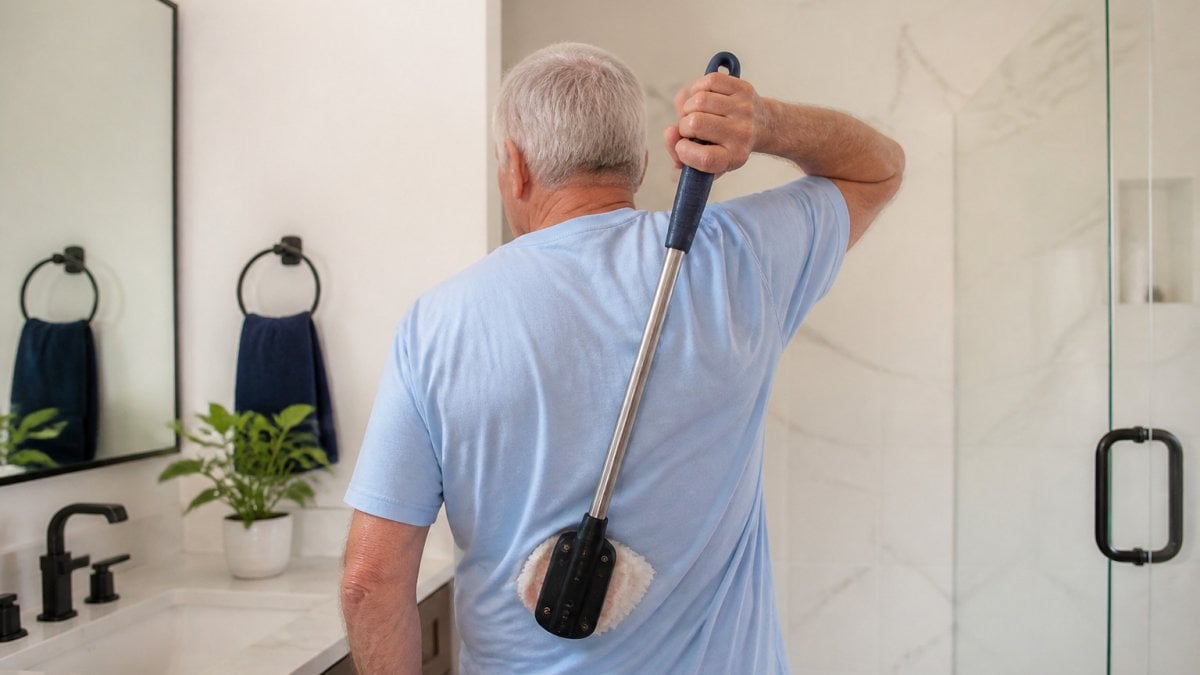
Prioritize tools with wide, soft handles, low trigger force, and minimal fine-motor demands. A thick silicone grip is easier to hold than a thin plastic handle, and a tool you can operate with your palm rather than your fingertips reduces strain. Beyond those basics, judge any candidate on these hand-function factors:
- Trigger force. The squeeze required to close the jaws. This is the single most important spec for arthritic hands, yet few listings publish it. If it is not stated, test the squeeze in a store or ask the seller before buying.
- Handle shape and diameter. A larger, contoured handle spreads pressure across the palm; a thin cylindrical handle concentrates it on the fingers and thumb.
- One-handed operation. Many back-care tasks, such as applying lotion or shaving, require the other hand for balance or support. Choose a tool you can hold and operate with one hand, and check whether the attachments lock securely so they do not twist mid-task.
- Left- and right-handed use. Rotating or reversible heads help, but confirm the trigger and grip sit comfortably in your dominant hand.
- Tremor and precision. A tool with a wide jaw and a stable, non-flexing shaft is easier to aim than a flexible head, which can amplify shake.
Safety and Appropriate Use
A back-reaching tool is an aid, not a substitute for clinical advice. A few boundaries apply to everyone, and especially to people recovering from surgery or living with balance limitations.
- Do not use a grabber to lift heavy objects; most are designed for light items only.
- Do not use a reacher to compensate for balance loss while standing on a stool or reaching over a stairwell. Sit or stabilize first.
- Avoid grabbing hot items, sharp blades, or fragile glass with a grabber unless the tool is rated for it.
- Follow post-operative restrictions from your surgeon; a grabber can help you avoid bending, but it does not replace prescribed movement limits.
- Stop using any tool that causes pain, numbness, or joint swelling, and check locking mechanisms before each use.
Watch out: A tool that feels comfortable in the first minute can cause fatigue after several uses. Build up gradually rather than using a new tool for a long session on day one.
Care, Maintenance, and Long-Term Value
Grip and reach are only half of value; the other half is how the tool holds up. Clean grips and cutting heads regularly, check joints and cables for fraying or looseness, and replace worn rubber tips before they stop holding smooth objects.
Test any tool in a store if possible. Hold it for a full minute, squeeze the trigger ten times, and check whether your hand tires. Avoid tools that require you to pinch or twist while under load.
Electric Back Shaver and Walton Multiback Reacher Attachments
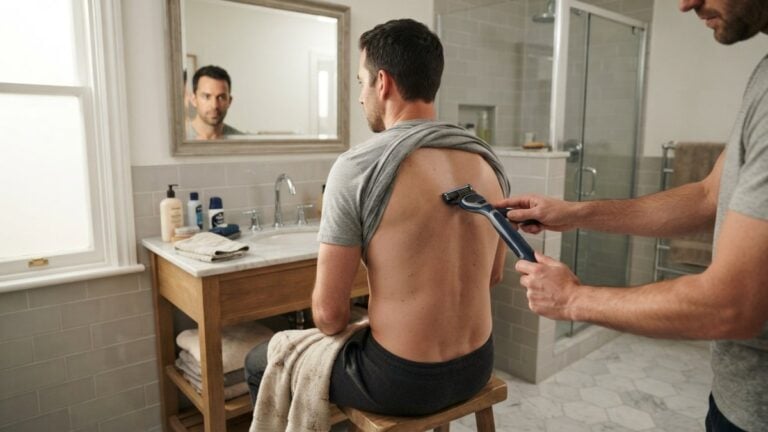
An electric back shaver removes body hair without the need to reach behind you with a blade.
Attachments mount to the Walton Multiback Reacher base unit, so you can use one handle for several tasks. The complete three piece set includes the shaver head and included cream.
Keep the cutting head clean and replace it when the blades dull.
Safety Tips and Choosing Your Back-Reaching Tool Today
Reaching tools can cause injury if you use them carelessly. Keep these habits in mind:
- Do not lift heavy objects with a reacher grabber. Most are designed for light items.
- Check locking mechanisms before each use.
- Stop using any tool that causes pain, numbness, or joint swelling.
- Keep the tool clean, especially grips and cutting heads.
To choose your tool today, start with the task you do most often. When you are ready to decide, this page on choosing the right back care tool walks through the selection process. If you struggle to reach the floor, a reacher grabber is the right starting point.
For a deeper guide to selecting an ergonomic back groomer, read our article on How to Choose an Ergonomic Back Groomer for Seniors. If arthritis affects your reach, our step-by-step guide on How to Reach Back With Arthritis explains how to adapt your routine.
Frequently Asked Questions
What is the best reaching grabber tool?
The best choice depends on the task. For general household pickups, a sturdy reacher with a rotating head and a trigger handle works well. Folding models suit travel and storage, while telescopic models cover higher shelves. Check reach length, jaw span and grip strength against what you need to lift, and compare prices directly with each seller since current pricing varies by retailer.
What is a good grabber for seniors?
Seniors usually benefit from a lightweight reacher with an ergonomic handle, a trigger that needs little grip strength, and anti-slip tips. Look for a reach length that avoids bending and a jaw that closes firmly on small items. Test the tool in the store if possible, or confirm return terms before buying.
What is the best tool for applying lotion to your back?
A long-handled lotion applicator with a flat or angled pad lets you spread lotion across the upper and middle back without a second person. Choose one with a grip that stays secure when wet and a head that holds product evenly. Foam or microfiber pads suit sensitive skin, and a reacher-style design can also help hold the applicator steady.
What features make a back-reaching tool easier to use with arthritis?
Arthritis makes a wide, soft, non-slip handle and a light trigger most important. Silicone or foam grips reduce the squeezing force needed, and an over-molded base can add comfort. Avoid tools that require a firm pinch to operate. Check the weight and the force required to close the jaws before buying.
Walton Multiback Reacher designs its back-maintenance system around a silicone base unit and interchangeable attachments. If your daily routine includes hard-to-reach areas, it is worth comparing the system against the standalone reacher grabbers and applicators above.